Solar road studs, as traffic warning facilities that actively emit light, can significantly enhance the recognition of road contusions and reduce the incidence of traffic accidents in low visibility environments such as at night and in rainy or foggy conditions. They are one of the core equipment for ensuring traffic safety.
However, the demands for different roads in different environments vary greatly. The speed of vehicles on expressways is fast, the road conditions on urban main roads are complex, and an important point is that the tropical rainforests in Southeast Asia and the extremely cold and low temperatures in high-latitude regions have significant climate differences. Therefore, the performance requirements for solar road studs are naturally different. Therefore, it is clearly not advisable to uniformly use conventional standardized solar road studs. According to different climates, environments and road requirements, personalized customization of solar road studs can precisely match the usage needs.
Mastering the scientific logic of customization, choosing a reliable solar road stud customization manufacturer, and clarifying the core customization factors are of vital importance to the safety and economy of traffic engineering.
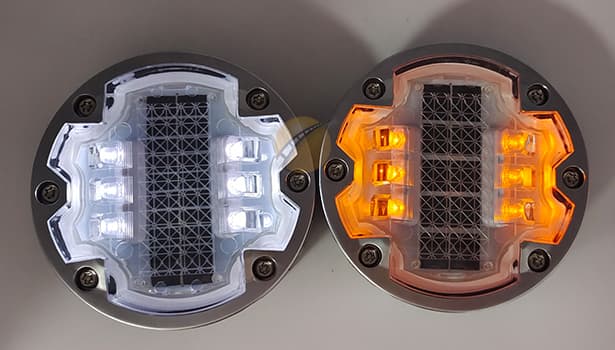
Brightness and visible distance are the core optical indicators that determine the warning effect of solar road studs, and they need to be strictly customized according to the requirements of road speed and visual distance. The faster the vehicle speed, the higher the visible distance requirement for the road studs, and the corresponding brightness demand also increases accordingly.
For instance, the speed of vehicles on expressways is generally above 100km/h, so solar road studs with a brightness of ≥300cd and a visible distance of ≥200m need to be custom-made. The vehicle speed on urban side roads is relatively low. A brightness of ≥150cd and a visible distance of ≥100m are sufficient to meet the requirements.
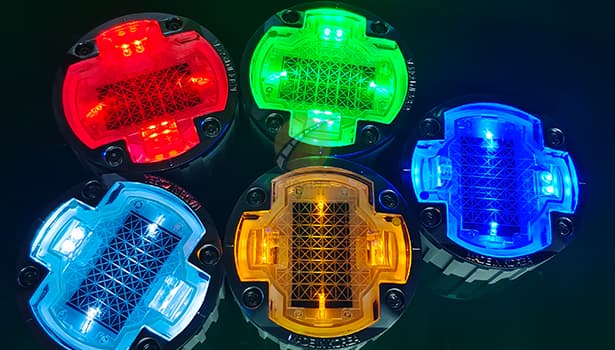
The LED light color and mode of solar road studs need to be customized in accordance with the traffic warning requirements and scene characteristics. For specific selection, please refer to the table below:
|
Application Scenario |
Recommended Light Color |
Light Mode Customization |
Description |
|
Expressway main lanes |
White / Yellow |
Flashing (2–3 Hz) |
Enhances long-distance visibility at high speeds and clearly defines lane boundaries. |
|
Urban intersections & zebra crossings |
Red / Yellow |
Constant light + intelligent sensor flashing |
Provides continuous pedestrian crossing visibility, with sensor-triggered flashing to warn vehicles to slow down and improve pedestrian safety. |
|
Schools & residential communities |
Soft Yellow |
Constant light or low-frequency flashing |
Avoids excessive light stimulation and is suitable for low-speed traffic environments. |
|
Scenic area roads |
Warm White / Amber |
Constant light |
Functions as a safety warning while maintaining visual harmony with the surrounding landscape. |
The energy system of solar road studs directly determines their endurance and reliability. When customizing solar road studs, it is necessary to customize the configuration of solar panels and batteries according to local light conditions and weather characteristics.
The core differences of solar panels lie in the type of material and conversion efficiency, and different types are suitable for different scenarios:
|
Solar Panel Type |
Conversion Efficiency |
Applicable Scenarios |
Cost Level |
Key Features |
|
Monocrystalline Silicon Solar Panel |
18%–23% |
Areas with average lighting conditions and limited installation space |
Higher |
High conversion efficiency, stable power generation performance, ideal for projects with high performance requirements |
|
Polycrystalline Silicon Solar Panel |
15%–18% |
Open areas with abundant sunlight |
Lower |
Cost-effective solution with good performance, suitable for large-scale applications |
The type, capacity and output capacity of the battery need to be customized in combination with the local duration of sunlight and the frequency of rainy and cloudy weather to ensure that the road studs can still work stably in the absence of sunlight. The comparison of common battery types and their compatibility scenarios are as follows:
|
Battery Type |
Capacity Range |
Advantages |
Disadvantages |
Suitable Scenarios |
|
Lithium Battery |
1000mAh – 5000mAh |
Large capacity, long lifespan, lightweight, high charging and discharging efficiency |
Relatively high cost |
Areas with frequent rainy days, low sunlight availability, and high requirements for battery performance and service life |
|
Lead-Acid Battery |
2000mAh – 8000mAh |
Low cost, stable output, mature and widely used technology |
Heavy weight, shorter lifespan, poor low-temperature performance |
Warm regions with abundant sunlight and budget-sensitive projects |
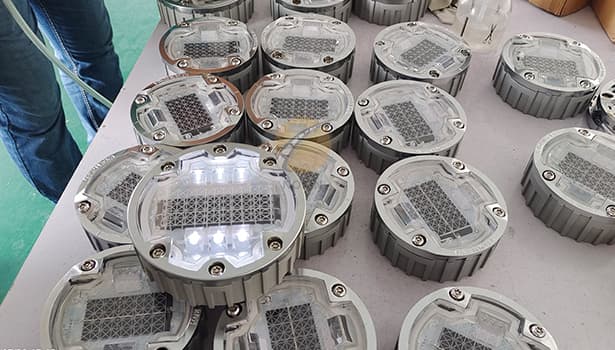
The structural form of solar road studs needs to be customized according to the differences in road conditions. The core is divided into three types:
The selection of materials directly affects the service life and weather resistance of road studs.
|
Material Type |
Core Performance |
Applicable Scenarios |
Cost Range (USD / piece) |
|
ABS / PC Plastic |
Corrosion-resistant, impact-resistant, lightweight |
Urban branch roads, community roads, temporary or low-traffic scenarios |
5–15 |
|
Aluminum Alloy |
High strength, high-temperature resistance, excellent resistance to heavy rolling |
Highways, main urban roads, high-traffic areas |
15–30 |
|
Ceramic |
Extremely wear-resistant, long service life, capable of withstanding high temperatures, heavy loads, and high traffic flow |
Highways, heavy-load roads, long-term infrastructure projects |
30–50 |
The pressure resistance performance needs to be customized according to the type of road vehicles. For ordinary urban roads, a pressure resistance grade of ≥20 tons is required, while for heavy-load scenarios such as expressways and logistics parks, a pressure resistance grade of ≥50 tons is required.
Weather resistance is mainly reflected through the waterproof and dustproof IP rating. For outdoor scenarios, at least IP67 rating should be achieved (able to be submerged in 1 meter of deep water for 30 minutes without damage). In rainy, dusty or coastal areas with high salt fog, a fully sealed design with IP68 rating should be customized to ensure the long-term stable operation of the product.
To enhance energy utilization efficiency and usage flexibility, customizable sensing and energy-saving modes are available:
For large-scale transportation engineering or intelligent transportation system projects, customized remote monitoring and interconnection functions can be provided.
Customized protective designs are required for different climate regions to ensure the weather resistance of the products.
The type of road surface directly affects the installation plan and the design of fasteners, and they need to be precisely adapted
Solar road studs customization must comply with the road safety standards of the country or region where the project is located to avoid compliance risks. Common international and regional standards include:
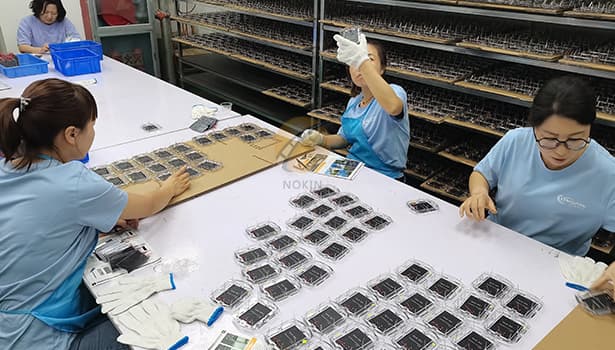
To ensure the quality stability of customized products, manufacturers need to have a complete quality management system, and the customized solutions should be included in relevant product certifications
Choosing the right solar road stud customization manufacturer is crucial to ensuring technical feasibility, delivery reliability, and long-term project performance.
The key assessment focuses on the manufacturer's R&D capabilities and innovation strength: whether it has a professional R&D team, whether it holds core technology patents, and whether it can quickly provide feasible customized solutions for special needs (such as extreme climate adaptation, special intelligent functions).
It is recommended to give priority to manufacturers with a high proportion of R&D investment and multiple successful customization cases to ensure the technical feasibility of the customization solution.
Manufacturers need to have a complete OEM customization process, including full-service capabilities such as demand matching, solution design, sample production, mass production, and quality inspection.
Before cooperation, it is necessary to verify the manufacturer's past customization cases, especially those similar to your own project scenarios, to understand their customization experience and delivery quality. At the same time, clarify the details of OEM services, such as whether personalized demands like logo customization and packaging customization are supported.
Production capacity needs to match the order scale: The number of production lines of the manufacturer, peak production capacity, and the advancement of production equipment directly determine whether batch orders can be completed on time.
At the same time, the delivery cycle needs to be confirmed: The sample delivery cycle is recommended to be ≤7 days, and the batch delivery cycle should be reasonably set according to the order size (for example, for orders within 1,000, it should be ≤30 days). In addition, it is necessary to assess the manufacturer's logistics cooperation capabilities to ensure that the products are delivered safely and on time to the project site.
Good communication and after-sales service are the guarantees for customized cooperation: manufacturers need to have the ability to communicate in multiple languages (such as English, Chinese, etc.) to ensure smooth demand matching during cross-border cooperation.
The sample cycle needs to be quick to facilitate the rapid verification of the feasibility of the plan. After-sales service should provide a complete maintenance plan, such as the product warranty period (it is recommended to be ≥2 years), fault repair response mechanism, spare parts supply service, etc., to address concerns about later use.
The customization cost of solar road studs mainly consists of core components, structural materials, customization functions, production and processing, etc. Among them, the cost of core components accounts for the highest proportion, as follows:
During the customization process, it is necessary to pay close attention to hidden costs to avoid additional expenses later.
Bulk purchasing is an effective way to reduce customization costs: As the purchase quantity increases, manufacturers can lower unit costs through large-scale production. Generally, when the purchase quantity is ≥ 1,000 units, the unit cost can be reduced by 10% to 20%. When the purchase volume is ≥ 5,000 units, the unit cost can be reduced by 20% to 30%.
Establishing long-term cooperative relationships with manufacturers can lead to more favorable pricing, prioritized production schedules, and more comprehensive after-sales services. At the same time, it can reduce the cost of demand matching for each cooperation and enhance customization efficiency.
The customization of solar road studs is not merely a simple adjustment of specifications, but a systematic project centered on safety performance and scene adaptability. From clarifying the core goals to precisely controlling key customization factors such as optical performance, energy systems, structural materials, intelligent functions, environmental adaptability and compliance, and then to choosing manufacturers with solid technical capabilities and comprehensive services, every link directly affects the usage effect and economy of the product.
As a professional solar road stud manufacturer with OEM and customization capabilities, NOKIN has been involved in the design and production of solar road studs for highways, urban roads, and intelligent traffic projects worldwide. Our manufacturing experience covers optical performance optimization, energy system configuration, material engineering, and compliance with international road safety standards.
If you are looking for a professional solar road stud customization solution or need to connect with a reliable solar road stud customization manufacturer, please contact NOKIN. We will provide you with one-on-one customization solution design and manufacturer matching services to help your traffic project achieve the goals of safety, efficiency and economy.