In the field of traffic safety facilities, solar-powered road studs are the "invisible guardians" guiding traffic flow at night and in bad weather - whether it is lane edge warnings on expressways, intersection traffic diversion on municipal roads, or pedestrian safety tips on park roads, they all need to function stably.
However, the demand for road studs varies significantly in different scenarios: highways require heavy-duty road studs that are resistant to pressure and impact, tunnels need high-brightness always-on types, and scenic area roads may require custom-made appearances that match the ambient color tones. At this point, OEM (Original Equipment Manufacturing) and customized services become crucial - they enable the road studs to precisely match the scene requirements rather than passively choosing standardized products.
As a solar road stud customization manufacturer, NOKIN will provide buyers with a set of practical OEM and customization strategies from four dimensions: customization options, supplier evaluation, technical indicators, and procurement practices, to help avoid quality risks, reduce cooperation risks, and achieve precise matching of "demand - product - scenario".
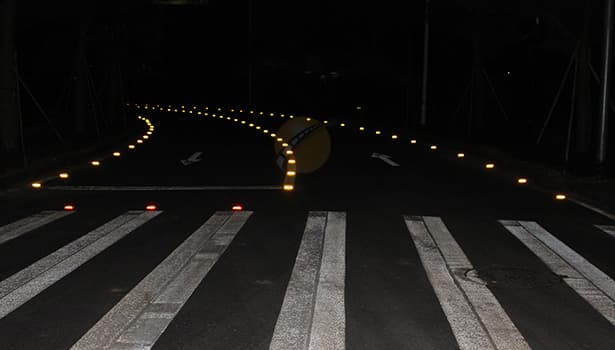
The core of customization is "adjustment on demand". The customization of solar road studs should focus on two major cores: "safety performance" and "scene adaptation", and be carried out from four dimensions: lighting, materials, installation and brand.
Lighting is the core function of solar-powered road studs, and its parameter customization directly affects the traffic safety effect.
Red is mostly used in prohibited or dangerous areas (such as road edges and construction sections), white is suitable for guiding regular lanes, and blue is commonly seen in specially controlled sections (such as emergency passages). For instance, the municipal department has custom-made red flashing road studs on the roads around schools, which can enhance the warning for pedestrians crossing the street at night. The median strip of expressways mostly adopts the white constant-lit type to avoid glare from oncoming traffic.
For high-traffic sections, it is recommended to choose the flashing mode (such as flashing once every 3 seconds) to enhance the driver's attention through visual changes. For low-traffic park roads or within residential areas, the always-on mode can be selected to avoid visual fatigue caused by frequent flashing.
In low-visibility scenarios such as tunnels and rainy nights, the LED brightness should be ≥8000mcd to ensure a visible distance of ≥500 meters. For ordinary urban roads, the energy consumption can be appropriately reduced to 5,000-6,000 MCD to balance energy consumption and effectiveness.
Solar-powered road studs need to withstand the long-term pressure of vehicles and the erosion of wind and rain. The material selection directly determines their service life.
PC plastic road studs are low in cost and light in weight, making them suitable for medium and low traffic load scenarios such as parks and residential areas. Aluminum alloy road studs have strong compressive resistance (up to 30-50 tons), can withstand high and low temperatures (-40℃ to 80℃), and are suitable for expressways and extremely cold regions. Ceramic road studs, with their high hardness and corrosion resistance, are often used in coastal areas with high salt fog or scenic roads to enhance the appearance and texture.
No matter which material is chosen, two core indicators must be clear: one is that the compressive strength is greater than 30 tons (to withstand the crushing of heavy trucks), and the other is that the protection level reaches IP68 (can be immersed in a water depth of 1.5 meters for a long time and resist the invasion of heavy rain and water accumulation).
The selection of installation methods should take into account both "road impact" and "usage effect" to avoid the trouble of later maintenance.
The raised road studs are easy to install (only require glue fixation), cause little damage to the road surface, and are suitable for small and medium-sized projects such as municipal roads and parks. Embedded road studs need to be installed in grooves on the road surface and have stronger compressive resistance (up to over 50 tons), but they have high construction costs and cause significant damage to the road surface. They are more suitable for heavy traffic scenarios such as expressways and freight channels.
Asphalt pavement should use sealant with better elasticity to prevent the road studs from loosening at high temperatures. For cement roads, hard glue can be used to enhance adhesion. There was once a municipal project where, due to the failure to distinguish the types of road surfaces, all the embedded road studs on the asphalt road surface protruded in summer, increasing the rework cost by 20% later.
For large-scale infrastructure projects or chain parks, brand customization can enhance the project's recognition.
Printing the enterprise LOGO or project name on the surface of the road studs can not only enhance brand exposure but also facilitate the confirmation of ownership during later maintenance (such as roads in a park jointly built by multiple developers).
Conventional road studs are mostly black or gray. However, if the project has special visual requirements (such as matching natural tones for scenic area roads and enterprise VI for commercial parks), custom colored road studs (such as brown or green) can be made. It should be noted that the colored road studs should be made of UV-resistant materials to avoid fading after long-term exposure to the sun.
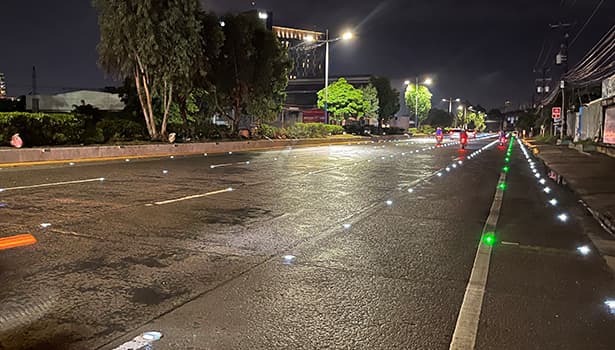
The key to OEM cooperation lies in "choosing the right partner" - the strength of the supplier directly determines product quality, delivery efficiency and after-sales service, and it is necessary to strictly screen from seven dimensions.
Experienced suppliers can better handle the "special circumstances" in customized demands and avoid the common design loopholes of novice manufacturers.
Manufacturers with over 10 years of experience usually have handled customized cases in various scenarios (such as cross-border projects and extreme climate projects), and can quickly understand the needs of buyers. For instance, a buyer from Southeast Asia once ordered high-temperature resistant road studs from a novice manufacturer. Due to not taking into account the local 45℃ high-temperature environment, the battery life was shortened from three years to one year. Experienced solar road stud customization manufacturers will proactively recommend the use of high-temperature resistant lithium batteries to avoid such problems.
If the buyer is a large-scale infrastructure project (such as highway renovation), it is necessary to check whether the supplier has similar cases (such as having received orders over ten thousand yuan). If it is a cross-border project, it is necessary to confirm whether the supplier is familiar with the standards of the target market (for example, CE certification is required in Europe and FCC certification in the United States).
Insufficient production capacity or delayed delivery will directly affect the project progress. It is necessary to confirm the production capacity of the supplier in advance.
If the order quantity is between 10,000 and 50,000 pieces, it is necessary to confirm that the manufacturer's monthly production capacity is ≥ 100,000 pieces (with a buffer space reserved). If the order quantity exceeds 100,000 pieces, the manufacturer must have more than two production lines to avoid delivery delays caused by the failure of a single production line.
If there is an urgent need for the project (such as sudden road maintenance), it is necessary to confirm whether the supplier can provide "expedited service" - for example, if the regular delivery cycle is 30 days, can the expedited order be delivered within 15 days, and whether the expedited fee is reasonable (usually no more than 20% of the regular price).
International certification is the foundation of product compliance, while quality control processes determine the stability of product quality.
CE certification ensures that products comply with EU safety standards (such as electrical safety and electromagnetic compatibility), RoHS certification ensures that products do not contain harmful substances such as lead and mercury (avoiding environmental compliance risks), and ISO 9001 certification reflects whether the manufacturer's quality management system is standardized. The buyer needs to request the supplier to provide a scanned copy of the original certification certificate to avoid "forged certification".
High-quality solar road stud customization manufacturers will manage the entire chain from "raw materials - production - finished products". Raw materials need to be tested (such as the impact resistance of PC plastic and the capacity of lithium batteries), and samples should be taken for testing every two hours during the production process (such as the brightness and compressive strength of leds). Finished products need to undergo 100% waterproof testing (IP68 grade testing requires soaking for 24 hours). A certain buyer once failed to confirm the quality control process, resulting in 10% of the received road studs having insufficient LED brightness, and the subsequent rework cost was extremely high.
If the buyer has special customization requirements (such as intelligent road studs, ultra-long endurance road studs), the R&D capabilities of the supplier are of vital importance.
For instance, if a high-speed project requires intelligent road studs that automatically enhance brightness when vehicles approach, the supplier must have the R&D capabilities for sensor integration and software programming. If the supplier can only produce standardized products, it will be unable to meet such demands.
High-quality suppliers will provide a preliminary solution within 3 to 5 days after receiving the customization request and produce samples within 10 to 15 days. Suppliers with weak R&D capabilities may need more than one month to come up with a solution, which seriously affects the project progress.
OEM cooperation involves multiple rounds of demand communication. The communication efficiency and service attitude of suppliers directly affect the cooperation experience.
Suppliers are required to provide multiple communication channels and promise to reply to messages within 1-2 hours during working hours. If suppliers often fail to reply within 24 hours, it will lead to delays in demand confirmation and affect the production progress.
It is necessary to confirm whether the supplier provides after-sales technical support (such as installation guidance and fault repair) - for example, if a short circuit problem occurs after the installation of the road studs, can the supplier provide a solution within 48 hours, and whether there is a local service team.
Sample testing is the key to avoiding risks in mass production and must not be omitted.
High-quality suppliers will provide 1 to 5 free samples (with only the buyer bearing the shipping cost), facilitating the buyer's performance testing. If the supplier asks the buyer to pay a high sample fee (such as more than 100 yuan per piece), it should be considered carefully - this may indicate that the manufacturer lacks confidence in its own products.
Samples should be sent out within 7 to 10 days after the requirements are confirmed to avoid any delay in the overall project progress due to sample delays. After the buyer receives the samples, they need to test them in actual scenarios (such as testing the water resistance in a simulated heavy rain environment and the compressive strength with a press). Only after confirming that they meet the requirements can mass production be advanced.
At present, there are some "shell companies" in the market (without actual factories and only engaged in resale trade), and the strength of suppliers needs to be confirmed through factory verification.
Suppliers can be requested to provide real-time factory video (such as production lines, warehouses, and testing laboratories), or a video call for a "cloud inspection" can be conducted to confirm that they have actual production capacity rather than being "shell companies".
If the order amount exceeds 1 million yuan, it is recommended to conduct an on-site inspection of the factory - to check whether the production line is standardized, whether the testing equipment is complete, and whether the workers' operations are professional, to avoid the order not being delivered due to "shell companies".
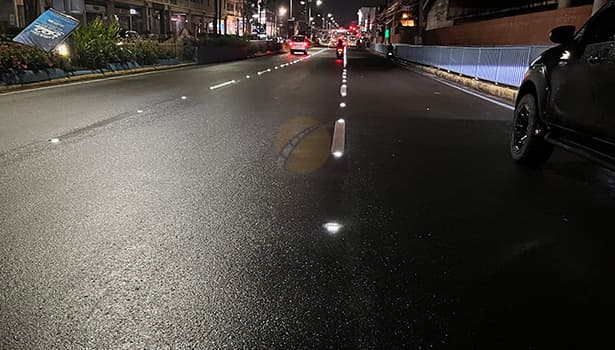
Whether it is customization or OEM, technical indicators are "hard currency" - if the core indicators do not meet the standards, even the most perfect customization is meaningless. Four dimensions need to be focused on.
Durability directly determines the service life of road studs, and two core indicators must be strictly required.
The road studs on ordinary urban roads need to withstand a pressure of no less than 30 tons (suitable for small cars and SUVs), while those on expressways and freight channels need to withstand a pressure of no less than 50 tons (suitable for heavy trucks). During the test, the road studs can be placed under the press. After applying a pressure of 30 tons, observe whether they deform - high-quality road studs will only slightly deform and return to their original shape when released. Poor-quality road studs will crack or severely deform.
IP68 is the "waterproof and dustproof ceiling" for road studs - it can be immersed in a water depth of 1.5 meters for 24 hours without water ingress, completely resisting dust intrusion. If the protection grade is only IP65 (resistant to jet water), it is prone to short circuits in heavy rain and waterlogged environments, and its service life will be significantly shortened (from 3-5 years to 1-2 years).
Solar-powered road studs rely on solar charging, and their energy performance directly affects "whether they will fail".
Solar panels are classified into three types: monocrystalline silicon, polycrystalline silicon, and amorphous silicon. Monocrystalline silicon has the highest efficiency (conversion efficiency of 18%-22%) and can charge efficiently even on cloudy days. The efficiency of polysilicon comes second (15%-18%). Amorphous silicon has the lowest efficiency (8%-12%) and is only suitable for areas with abundant sunlight. It is recommended to give priority to using monocrystalline silicon panels to avoid the road studs running out of power and not lighting up on cloudy days.
The battery needs to be capable of storing sufficient power to ensure normal operation in continuous rainy weather - the regular requirement is ≥7 days of battery life, and in northern rainy areas or tunnels, ≥15 days of battery life is required. It should be noted that the type of battery is also crucial: lithium iron batteries have a long lifespan (3-5 years) and can withstand high temperatures, while lead-acid batteries have a short lifespan (1-2 years) and are prone to leakage. It is recommended to give priority to lithium iron batteries.
LED is the "eyes" of road studs, and its performance directly affects the warning effect.
The brightness of the LED on the expressway should be no less than 8000mcd, and the visible distance should be no less than 500 meters (ensuring that the driver has sufficient reaction time). Municipal roads should have a brightness of no less than 5000mcd and a visible distance of no less than 300 meters. The roads in the park should have a brightness of no less than 3000mcd and a visible distance of no less than 100 meters. During the test, actual scenarios can be simulated at night, and the visible distance can be measured with a distance meter to avoid "false brightness marking".
The lifespan of high-quality leds is ≥ 50,000 hours (approximately 5 years), while that of low-quality leds is only 10,000 to 20,000 hours (approximately 1 year), requiring frequent replacement and increasing maintenance costs. You can ask the supplier to provide brand certification for the LED to avoid using unbranded leds.
After-sales guarantee is the key to "hidden costs", and the terms need to be clearly defined in advance.
The warranty period for regular road studs is 2 to 3 years. High-quality manufacturers can offer a 5-year warranty (mainly for core components such as batteries and leds). It should be noted that the warranty terms must clearly specify the "warranty scope" (such as no warranty for man-made damage and free repair for natural faults) and the "repair method" (such as whether on-site repair is provided and who will bear the round-trip freight).
The supplier is required to provide a detailed installation guide (including steps, tool list, and glue type) to prevent the road studs from loosening due to improper installation. If required by the buyer, installation training (either online or offline) should also be provided. In the event of a malfunction in the later stage, the supplier must respond within 48 hours and provide a solution within 7 days (such as sending a new replacement or dispatching technicians for repair).
Even if the right supplier is selected and the customization requirements are confirmed, mistakes in the details of the procurement process can still lead to problems. Four best practices need to be followed.
Sample testing must not be a mere formality. It is necessary to conduct comprehensive tests based on actual scenarios to avoid large-scale rework after mass production.
Performance test: Test the LED brightness and solar charging efficiency (after charging for 8 hours on a cloudy day, observe whether the road studs can work continuously for 7 days).
Durability test: Immerse the road studs in 1.5 meters of water for 24 hours to test their water resistance. Apply a pressure of 30 tons with a press to test the compressive resistance.
Compatibility test: Fix it on the corresponding road surface (asphalt/cement) according to the actual installation method and observe whether it is loose.
It is recommended to reserve 1 to 2 weeks for testing to avoid missing any issues due to hasty testing. Avoid the situation where it fails to work properly after being put into use, causing additional losses.
Many buyers tend to fall into the "low-price trap" - only focusing on the unit price and ignoring the later maintenance costs, which eventually leads to a higher total expenditure.
Initial cost: Unit price of road studs + transportation fee + customs duty (for cross-border projects) Installation cost: Construction fee + glue fee + tool fee; Maintenance cost: The cost of replacing batteries and leds in the later stage + labor cost for maintenance.
The core costs of solar road studs (monocrystalline silicon panels, lithium iron batteries, and aluminum alloy shells) are relatively transparent. If the supplier's quotation is 30% lower than the market price, it is very likely that they have "cut corners" on materials (such as using polycrystalline silicon panels instead of monocrystalline silicon or lead-acid batteries instead of lithium iron batteries), and the risk of failure in the later stage is extremely high.
Road studs are prone to damage due to collision and compression during transportation, so the packaging and transportation terms must be clearly defined.
The supplier is required to use three-layer packaging of "cardboard box + foam + bubble wrap", with each road stud independently packaged (to avoid collision and scratches). The outside of the cardboard box should be marked with "Fragile" and "Upward" labels. If it is cross-border transportation, moisture-proof treatment (such as placing desiccants) is also required to prevent moisture during sea transportation.
It is stipulated in the contract that if the road studs are damaged during transportation (such as the shell cracking or the LED not lighting up), the supplier shall replenish them free of charge, and the replenishment period shall not exceed 7 days. The transportation cost shall be borne (or shared) by the supplier to avoid project delays caused by transportation issues.
Improper installation may cause the road studs to loosen and short circuit. It is necessary to operate strictly in accordance with the guidelines.
The guide should include: road surface cleaning steps (such as removing dust and oil stains), glue application methods (application area, thickness), curing time after installation (such as prohibiting vehicle rolling within 24 hours), and tool list (such as glue type, tape measure, level).
If it is a large-scale project (such as the installation of embedded road studs on expressways), you can request the supplier to send technicians to the site for guidance to ensure the installation is standardized. After installation is completed, sampling tests should be conducted (such as randomly checking 10% of the road studs to test their brightness and firmness). Only after confirming that there are no errors should the acceptance be carried out.
The OEM and customization of solar road studs is not merely a "simple product adjustment", but a deep match of "demand - product - scenario" - from the selection of light color to the screening of suppliers, from the confirmation of technical indicators to the control of the procurement process, every step must be rigorous.
If you are promoting an OEM or customized project of solar road studs, whether you need a targeted customized solution or recommend a supplier that meets the standards, you can consult solar road stud customization manufacturer, NOKIN at any time. We will provide one-on-one practical support to help the project be implemented efficiently.