In the modern road traffic system, traffic signs are the core facilities that ensure traffic order and safety. Solar traffic signs, as an upgraded alternative to traditional signs, with their unique energy supply and lighting characteristics, are gradually becoming a key force in enhancing road safety. That is to say, solar LED traffic signs have now become a necessary part of modern road safety, and their presence cannot be ignored. Next, the solar traffic sign manufacturer NOKIN will provide you with a comprehensive analysis of the importance of solar traffic signs.
Solar traffic signs are a type of traffic warning and indication facility that uses solar energy as its power source. Their core structure is mainly composed of three components:
|
Component |
Primary Function Description |
|
Solar Panel |
Captures solar energy and converts it into electrical energy, serving as the core power supply for solar traffic equipment |
|
Battery |
Stores the electricity generated by the solar panel, ensuring reliable operation during nighttime or low-light conditions |
|
LED Light |
Acts as the main light source, delivering traffic information to drivers and pedestrians through bright and clear illumination |
Like other solar products, the working process of solar traffic signs is also simple and efficient, following the logic of "energy capture - storage - utilization":
During the day, the solar panel captures solar energy and converts it into electricity, charging the battery at the same time; when the ambient light intensity decreases (such as at night, on cloudy days), the built-in light control system will automatically activate, triggering the battery to supply power to the LED light, making the sign light up to clearly display traffic information. The entire process does not require manual intervention, achieving all-day operation.
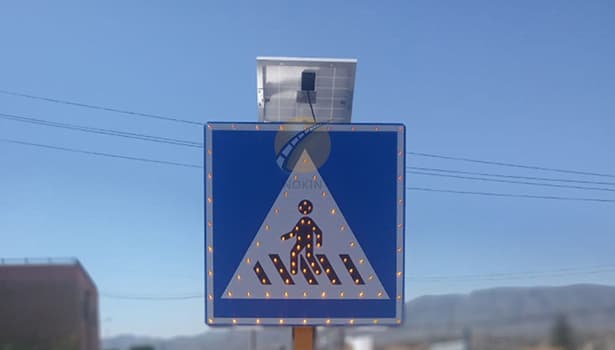
The primary prerequisite for road safety is "visible information". Solar traffic signs have significant advantages in this dimension. Unlike traditional reflective signs that rely on vehicle lights for reflection to be recognized, solar traffic signs adopt an active light-emitting LED design, which can actively release light, making it easier for drivers and pedestrians to notice in night or bad weather (rain, fog, snow).
Its high-brightness LED light source has stronger penetration, even in low visibility environments, allowing traffic information to be recognized at a longer distance, effectively extending the driver's reaction time. At the same time, the automatic switching to the night mode ensures that the light intensity is adapted to the environment, neither causing glare due to excessive light nor making the information blurry due to insufficient light.
Traditional light-based traffic signs rely on the power grid for supply. In the event of power grid failures, line maintenance, or extreme weather causing power outages, the signs will lose their warning function, easily causing traffic chaos and even accidents.
Solar traffic signs achieve energy self-sufficiency through a photovoltaic battery charging system, completely independent of the external power grid. Whether there is a power outage or not, as long as the battery has electricity, it can continue to light up and operate, ensuring uninterrupted traffic warning information and providing stable safety guarantees for road traffic.
Traditional traffic signs (especially light-based signs) require connection to the city power grid, involving complex wiring projects. Not only does the construction period last long, but it is also limited by the installation environment - in remote areas, temporary construction zones, or areas without power grid coverage, installation is extremely difficult, or even impossible.
Solar traffic signs do not require external power supply or cumbersome wiring construction. Just select the appropriate installation location (ensuring sufficient light), and they can be quickly deployed. This flexibility enables it to be widely applied in various scenarios, especially in temporary traffic control areas and remote roads where traditional signs are difficult to cover. At the same time, the automatic light control and energy storage functions reduce the need for manual switching and electricity monitoring, further enhancing the ease of use.
From a long-term operational perspective, the cost advantage of solar traffic signs is very obvious. To illustrate more intuitively, the following is a cost comparison between solar traffic signs and traditional light-based traffic signs:
|
Cost Type |
Solar Traffic Signs |
Traditional Light-Based Traffic Signs |
|
Operating Electricity Cost |
None (powered entirely by solar energy) |
Monthly electricity payment required. Based on a single unit rated at 50W, the annual electricity cost is approximately $48 (calculated at $0.10 per kWh) |
|
Maintenance Cost |
Low. LED lights typically last 5–10 years, and batteries last 3–5 years. Annual maintenance cost is approximately $20 |
High. Light bulbs last 1–2 years and require frequent replacement. Electrical wiring is also prone to aging. Annual maintenance cost is approximately $80 |
|
Long-Term Total Cost (10 Years) |
Approximately $200–300 (including battery replacement) |
Approximately $1,280 (including electricity costs and maintenance expenses) |
From the table, although the initial purchase cost of solar traffic signs may be slightly higher than traditional signs, in the long run, the advantages of no electricity expenses and low maintenance frequency make its total cost significantly lower, especially suitable for large-scale promotion and use.
In the context of global focus on carbon neutrality and green development, solar traffic signs provide an effective solution for energy conservation and emission reduction in the transportation sector. Their core advantage lies in the renewability of the energy source - solar energy is a clean, pollution-free renewable energy source. Utilizing solar energy to drive traffic signs can significantly reduce reliance on traditional power sources such as thermal and hydropower.
According to statistics, a single ordinary solar traffic sign can reduce approximately 50 kilograms of carbon dioxide emissions per year (calculated based on replacing traditional 50W light signs). If widely applied in urban transportation systems, the cumulative emission reduction effect is significant, helping cities achieve the carbon neutrality goal in the transportation sector. At the same time, its installation without wiring also reduces the damage to the soil and vegetation during construction, further aligning with the green development concept.
This environmental attribute also conforms to the global focus on energy efficiency and emission reduction targets, being an important manifestation of the transformation of transportation infrastructure towards greenness.
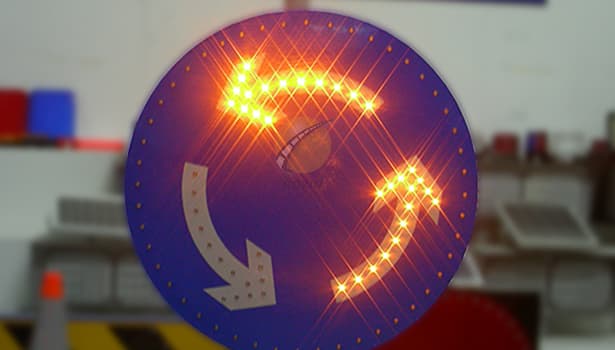
Urban main roads, transportation hubs, and intersections are areas with high traffic flow and are also accident-prone sections. In these areas, solar traffic signs can play an important role: through high-brightness LED warnings, they can strengthen the transmission of traffic information such as speed limits, no overtaking, and intersection yielding, as well as provide clear guidance for pedestrians crossing the road and non-motorized vehicle traffic.
For example, setting up solar yellow flashing warning signs at busy intersections can effectively remind drivers to slow down; setting up solar directional signs at the entrance of tidal lanes can clearly guide vehicle directions, reducing traffic congestion and collision accidents.
Remote highways, mountainous roads, and rural paths in rural areas often lack power grid coverage, and traditional traffic signs are difficult to deploy, resulting in a lack of effective safety guarantees for these sections. Solar traffic signs' energy independence makes them an ideal choice for such areas.
Setting up solar warning signs in sharp bends, steep slopes, and rockfall danger areas on remote sections can continuously remind drivers to pay attention to safety 24 hours a day; in temporary construction non-wired sections, solar temporary signs can be quickly deployed to guide vehicles to detour, avoiding accidents caused by the absence of warnings in the construction area.
In densely populated areas such as school gates, bus stops, and around shopping malls, where pedestrians and vehicles converge, safety warnings are particularly important. The application of solar-powered traffic signs in such scenarios can significantly enhance the level of pedestrian safety.
For instance, setting up solar-powered speed limit (30 km/h) warning lights and "Be Careful of Children" illuminated signs at school gates can actively remind drivers to slow down during school hours. Installing solar-powered pedestrian crossing indication signs at bus stops can enable drivers to detect the intention of pedestrians crossing the road in advance and stop in time, reducing incidents of vehicle-pedestrian collisions.
With the rapid development of intelligent transportation (ITS) technology, solar-powered traffic signs are upgrading towards intelligence and networking. Their functions are no longer limited to simple warnings and instructions. In the future, solar-powered traffic signs will gradually be deeply integrated with dynamic traffic information systems, sensor networks, the Internet of Things, etc., to achieve more flexible and efficient traffic management.
For example, after being equipped with traffic flow sensors, solar signs can display real-time congestion conditions on the road and accurately guide vehicles to plan the optimal route. When equipped with weather sensors, they can automatically adjust the brightness of LED lights based on adverse weather conditions such as rain and fog, ensuring clear traffic information. With the help of mobile communication technology, remote monitoring and fault warning functions can also be realized, allowing managers to monitor the operation status of the signs in real time and quickly handle various abnormal situations.
These intelligent upgrades will further enhance the practical value of solar-powered traffic signs, promoting them to become an important part of the intelligent transportation system, and helping to improve the overall road management efficiency and safety level.
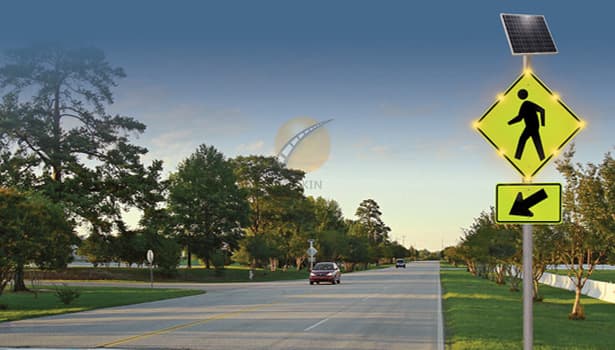
Solar-powered traffic signs, with their core advantages such as high visibility, energy independence, low maintenance costs, and environmental friendliness, play an irreplaceable role in enhancing road safety, optimizing traffic management, and promoting green development. They have become an important part of the modern traffic safety system.
From practical applications, they cover various scenarios including cities, remote areas, and densely populated pedestrian zones, and can precisely meet the safety warning needs of different road sections. Compared with traditional traffic signs, their advantages in deployment flexibility and long-term cost control also make them suitable for large-scale promotion.
Looking ahead, with the continuous maturity of solar technology and LED technology, as well as the deep integration of intelligent technology, the cost of solar traffic signs will further decrease, and their functions will become more diverse. It is expected that their global adoption rate will continue to increase. They will not only provide security for road safety in more countries and regions but also contribute significantly to the realization of the global carbon neutrality goal, promoting the development of transportation infrastructure towards greater safety, efficiency, and sustainability.