In low visibility scenarios such as night driving and rainy or foggy weather, drivers are prone to lane deviation and misjudgment of road conditions. Reflective road studs (reflective road signs) are the core traffic facilities that solve this safety hazard. As key tools for delineating road boundaries and guiding lanes, reflective road studs, with their efficient reflective properties and durable structure, have become standard safety products for highways, ordinary roads, parking lots, and private roads worldwide. Whether for daily commuting or long-distance highway driving, understanding the design principles, material characteristics, and color signals of reflective road studs can not only ensure driving safety but also enable the proper use of various road facilities. Next, we will deeply analyze the core knowledge of reflective road studs to help you fully grasp this road safety device.
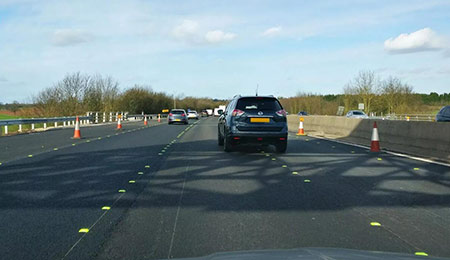
The core positioning of reflective road studs is durability + high reflectivity, taking into account long-term outdoor use and night warning effects. To maximize safety factors and reduce traffic accidents, most reflective road studs on the market are made of high-strength plastic or aluminum alloy, combined with professional acrylic plastic reflective sheets, achieving all-weather road guidance functions.
This acrylic reflective sheet adopts a precise prism structure design, which can be selected as single-sided or double-sided coverage according to road requirements, with higher light reflection efficiency; at the same time, the surface of the reflective sheet is coated with a special protective film, further strengthening the night reflective rate, even in strong light, weak light or rain erosion, it can maintain a clear reflective effect, allowing drivers to quickly capture the road outline.
In addition to the basic reflective function, reflective road studs also have additional safety warning attributes: when a vehicle rolls over, it can produce vibration and sound alarms, promptly alerting drivers to deviate from the lane; when used in conjunction with corrugated speed bumps, it can also provide dual noise warnings to force the vehicle to slow down and avoid dangerous driving behaviors such as speeding and crossing lines.
Reflective road studs (reflective road signs) are widely used in highways and two-lane roads worldwide, especially suitable for roads with insufficient lighting or no lighting. In low visibility environments such as at night, during rainstorms, fog, and sandstorms, reflective road studs can clearly mark lane boundaries and guide driving routes, helping drivers strictly adhere to traffic rules and maintain correct lane driving, reducing the risk of rollovers, rear-end collisions, and lane crossing accidents from the source.
The usage scenarios of reflective road studs vary, and the specifications and color requirements also differ: in private roads, parking lots, and other non-public areas, only white reflective strips are usually sufficient to meet the basic guiding needs; however, in highways, municipal roads, and other public transportation areas, the installation positions and functional meanings of different colored reflective road studs have strict industry standards and regulatory control to avoid signal confusion and safety accidents.
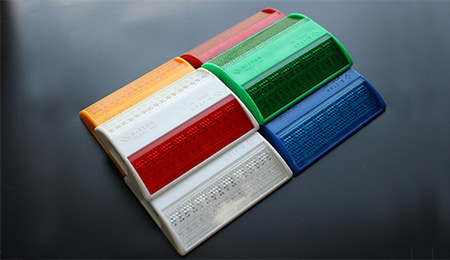
The color of reflective road studs on public roads is not randomly set; each color corresponds to specific road information and driving instructions. Here are the core color meanings of mainstream highway reflective road studs worldwide, suitable for traffic regulations in most countries and regions overseas:
|
Reflective Road Stud Color |
Core Function and Road Application |
|
White |
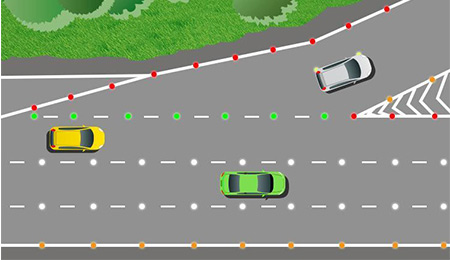
Marks lane boundaries and road center lines; standardizes same-direction traffic flow; the most commonly used basic reflective road stud color |
|
Red |
Marks the left edge of the road; indicates no entry and no crossing; ensures safety of the left boundary |
|
Amber (Yellow) |
Marks central dividers on two-lane roads and highways; separates opposing traffic; warns drivers to keep distance and avoid unsafe lane changes |
|
Green |
Indicates main lane edges, ramp entrances and exits, and non-motorized lane boundaries; guides safe lane changes and traffic diversion |
|
Green/Yellow Alternating |
Indicates temporary lane changes; commonly used in construction, maintenance, or roadwork zones; alerts drivers to slow down and detour |
|
Blue |
Marks locations of emergency fire-fighting facilities such as hydrants; helps emergency services quickly locate resources |
Although the core function and color logic of reflective road studs are globally consistent, various countries will launch differentiated products based on local road conditions and traffic regulations. For example, New Zealand proposes using non-dented rivet type reflective road studs to reduce road damage and extend road lifespan; some countries in Europe and America upgrade the waterproof and anti-freezing performance of reflective road studs to adapt to complex outdoor environments; some Southeast Asian countries optimize the brightness of reflective sheets to adapt to the climate characteristics of strong sunlight and high temperatures.
Reflective road studs may seem small, but they are key facilities for ensuring road traffic safety. Every detail, from durable materials, efficient reflective design, to standardized color signal system, is created to ensure driving safety. Whether it is the purchasing and installation by road engineering parties or the daily recognition by drivers, understanding the functional characteristics and color meanings of reflective road studs can not only improve road traffic efficiency but also minimize the accident rate to the greatest extent.
If you are choosing reflective road studs for highways, municipal roads, or parking lots, it is recommended to prioritize products that comply with international traffic standards, have durable materials, and meet the performance requirements of reflective light. At the same time, install them strictly according to color specifications to ensure clear road signals and effective safety control. We will also share installation techniques, maintenance methods, and selection tips for reflective road studs in the future to help create a safer road traffic environment.