In the scenario of purchasing solar road studs, the consultation methods of the vast majority of buyers are highly uniform. They basically only focus on one core parameter: "What is the maximum visibility distance of this road stud?" However, almost no one will calculate a key question in advance: What is the actual minimum visibility distance that your road scenario truly requires?
This is the core reason why most projects have two major problems: either the selection parameters are insufficient, leaving potential traffic safety hazards; or they overly pursue high parameters, resulting in unnecessary procurement and maintenance waste.
This article will convey a core selection logic: The visibility distance of solar road studs is not necessarily the larger the better; it should be sufficient and precisely match the scenario. Product parameters have never been the first benchmark for selection; the actual traffic passage requirements of the road scenario are the key.
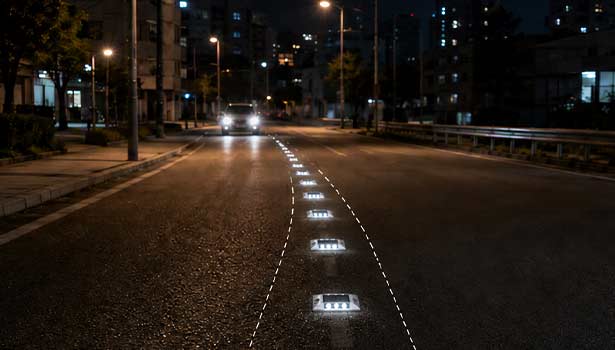
The core function of solar road studs is to reserve sufficient time for drivers to predict, react and brake. The minimum visibility distance required for the road is completely determined by the physical rules of driving and is a scientific and quantifiable standard, not a subjective parameter.
The general visibility distance calculation formula in the field of road safety is as follows, which is the core basis for all scenario selection:
Minimum required visibility distance ≥ Reaction distance + Braking distance
Reaction distance = Vehicle speed (m/s) × Reaction time (conventional 1.5–2.5 seconds)
Industry standard values: The reaction time of a regular driver under normal road conditions is taken as 2 seconds, which can cover the safety requirements of most traffic scenarios.
Based on the domestic road mainstream speed limit standards, with dry and flat road surfaces as the benchmark, the minimum safe visibility distances under different vehicle speeds are calculated. The data is clear and intuitive:
|
Vehicle Speed |
Reaction Distance (2-Second Standard) |
Braking Distance (Dry Road) |
Required Minimum Visibility Distance |
|
60 km/h |
33 m |
27 m |
≈ 60 m |
|
80 km/h |
44 m |
48 m |
≈ 92 m |
|
120 km/h |
67 m |
108 m |
≈ 175 m |
From the perspective of pure physical braking data, a visible distance of 175 meters can already meet the basic safety requirements for high-speed travel at 120 km/h.
However, the visible distances of mainstream high-end solar road studs in the market generally reach 800 meters, 1000 meters, or even higher. The core reason is that theoretical data cannot cover the complex and real road conditions.
In actual driving, multiple interfering factors will be added: glare from high beams at night, attenuation of road reflection in rainy weather, decreased visibility in foggy weather, and distraction of the driver.
The far exceed the basic requirements visible distance is essentially a safety redundancy design, which can retain sufficient recognition margin in harsh conditions, and this is the core value of long visible distance high-end products.
Based on road conditions, vehicle speed, lighting conditions, and environmental interference factors, we classify mainstream application scenarios, clearly defining the optimal visible distance, core demands, and selection logic for each scenario, and getting rid of blind selection.
|
Scenario Type |
Recommended Visible Distance |
Core Demand |
Reason for Recommendation |
|
Urban Roads / Parking Lots / Residential Areas |
500–800 m |
Cost efficiency with adequate visibility |
Vehicle speeds are relatively low, surrounding lighting is generally sufficient, and ultra-long visibility is unnecessary, helping avoid excessive project costs. |
|
Highways / Urban Arterial Roads |
800–1000 m |
High-speed recognition and dynamic guidance |
Designed to support driving speeds of up to 120 km/h, allowing drivers to identify road conditions earlier and maintain safe lane guidance. |
|
Tunnels / Heavy Fog / Frequent Rain Sections |
1000 m+ |
Strong light penetration and high stability |
In low-light and low-visibility environments, a long-range active light source provides reliable guidance and significantly enhances driving safety. |
In these scenarios, the average driving speed is generally lower than 60 km/h, and the lighting is sufficient at night, so the basic driving visibility conditions are good.
For daily driving, there is no need for long-distance anticipation, and the road studs with a visible distance of 500-800 meters can fully meet the core functions of lane separation, edge line warning, and speed reduction prompts.
Blindly choosing high-end road studs with a visible distance of 1000 meters or more is just paying extra costs for redundant performance, which is a completely unnecessary waste of resources.
Highway driving speed can reach 100-120 km/h, and the braking distance of vehicles is long, with extremely high requirements for the distance for early anticipation.
A visible distance of 800-1000 meters can form a continuous and complete lane light band, allowing drivers to clearly identify the lane direction, curve arc, and lane change area from a long distance.
This dynamic lighting guidance effect is irreplaceable by ordinary short-distance road studs and can effectively reduce dangerous behaviors such as lane deviation and overrunning the line in tunnels and in adverse weather conditions.
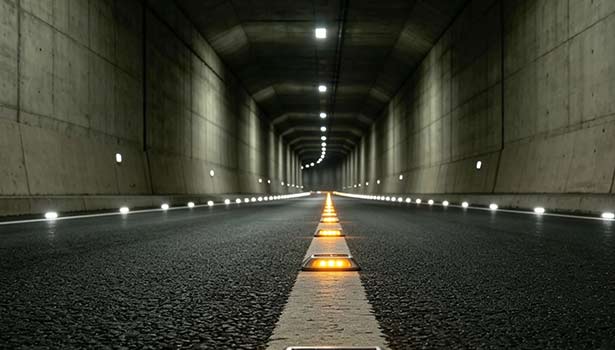
At the entrances and exits of tunnels, there is a typical black hole effect. When vehicles enter and exit the tunnel, the human eye will experience a brief visual adaptation blind zone, which is prone to visual illusions and panic.
At the same time, in rainy and foggy sections, the air visibility is low, which significantly weakens the light transmission effect.
Solar road studs with a penetration power of over 1000m can output a stable and bright light source, forming an uninterrupted lane outline light band, eliminating visual blind spots and significantly reducing the accident rate in tunnels and under adverse weather conditions.
Many buyers only consider the stated visible distance of the product when making a selection, but ignore the parameter attenuation brought about by the external environment and installation method, resulting in actual usage effects far lower than expected. The following three variables are implicit factors that must be considered when making a selection.
In clear and dry weather, the visible distance of the studs is the standard stated value. However, in fog, rainstorm, and sandstorm conditions, the light penetration significantly decreases.
Theoretical data shows that in adverse weather conditions, the actual visible distance of road studs is only about 50% of the nominal value. Therefore, in regions with persistent fog and rain, the selection should be actively raised by one gear to reserve sufficient weather attenuation redundancy.
Ordinary simple reflective road studs only rely on vehicle lights for passive reflection and have no self-illumination capability. They completely fail when there is no vehicle light illumination at night.
High-quality solar road studs adopt an LED active illumination + reflective plate passive reflection dual-verification design. Under normal conditions, the LED active illumination provides clear long-distance warning; in extreme cases where the battery runs out, the built-in reflective plate can still maintain basic visibility, ensuring the minimum safety standard for the road.
Solar road studs come in two installation methods: protruding and embedded. The visible angle varies greatly.
Installation angle deviation, insufficient road surface flatness, and improper embedded depth will directly compress the visible distance. Improper installation can reduce the nominal visible distance by up to 30%.
For core sections such as highways and tunnels, standardized protruding installation is preferred to ensure the lighting angle and visible distance meet the standards.
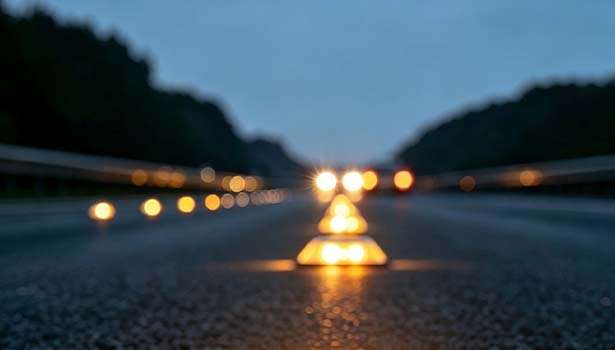
In the procurement of solar road studs, "the higher the parameters, the safer" is a typical cognitive misconception. Excessive configuration will only increase project costs without improving the actual safety value.
The industry price rule is clear: for every increase of one gear in the visible distance of the road studs, the product price generally rises by 20%-40%.
A higher visible distance corresponds to higher brightness LEDs, larger battery capacity, better light transmission materials, and more stringent processes. The hardware cost directly increases.
The most common waste case: purchasing 1000m+ flagship road studs in parking lots with very low vehicle speed and sufficient lighting.
In such scenarios, only 60%-70% of the basic performance of the product can be used, and the remaining 30% or more of the high-end parameters are completely idle, equivalent to paying additional procurement and maintenance costs for useless performance each year.
We would rather recommend you to buy 800m instead of hoping you pay more for 1200m - unless your scenario really needs it.
The core of professional selection is matching, not stacking parameters. A product that is precisely adapted to the scenario can achieve the optimal balance between safety effect and cost budget.
To facilitate the quick self-check and precise selection by the purchaser, we have compiled a 5-step simple self-check list to quickly lock in the parameter range of the road studs suitable for the project, eliminating mismatch and waste problems.
Highway / urban main road → Applicable to 800-1000m models
Urban ordinary roads / parking lots / residential areas → Applicable to 500-800m models
Tunnel / foggy and rainy mountainous sections → Applicable to 1000m+ flagship models
Speed ≤ 60km/h: No need for high parameters, basic models can meet the requirements
Speed 80-120km/h: Must select mid-to-high-end long visible distance products
Year-round sunny and few rainfalls: Select based on the basic scenario
Long-term foggy, rainy, sandy weather: Increase the installation gear by one level
Well-lit sections: Can appropriately reduce the visible distance parameters to control costs
Sections without lighting or weak lighting: Increase the visible distance to enhance the active warning effect
Only consider one-time procurement: Prioritize cost-effective compatible models
Consider 5-year long-term maintenance: Prioritize stable and redundant high-quality models to reduce later replacement costs.
|
Product Level |
Effective Visible Distance |
LED Light Intensity |
Compatible Scenarios |
|
City Cost-Effective Model |
500–800 m |
Regular High Brightness |
Urban roads, residential areas, parking lots, and park roads |
|
Highway Universal Model |
800–1000 m |
Medium-High Brightness |
Highways, urban arterial roads, and expressways |
|
Deteriorated Environment Flagship Model |
1000 m+ |
Ultra-High Penetration Brightness |
Tunnels, foggy mountain roads, rainy coastal sections, and high-risk unlit road sections |
The core logic of solar road stud selection: Do not choose the farthest ones, only select the most suitable ones.
High parameters that are disconnected from the context are meaningless and will only lead to cost waste; insufficient parameters will pose safety hazards. Comprehensive selection based on vehicle speed, road conditions, weather, and lighting conditions can achieve the optimal balance between safety effect and procurement cost.
If you want to precisely match the project requirements, avoid selection pitfalls, and control procurement costs? You can obtain an exclusive customized selection plan by using the following three core pieces of information:
Project road type (expressway / urban road / tunnel / parking lot, etc.)
Maximum vehicle speed on the section
Local main climate conditions (foggy / rainy / sunny and dry)
After submitting the information, NOKIN will recommend the suitable solar road studs to you one-on-one, precisely matching the requirements, and not spending a penny on unnecessary expenses.