For overseas importers, road safety brand owners, and government project contractors, the OEM mode has become the mainstream choice in the procurement decision of solar road studs due to its cost-effectiveness and market compatibility. This article will comprehensively analyze the core logic of OEM solar road stud light, the key differences from custom models, product configuration, and the entire procurement process from a procurement perspective, helping you quickly identify reliable suppliers and efficiently layout the local market.
In the expansion process of the global road safety market, OEM solar road stud light has gradually replaced some spot purchases and become the preferred cooperation model for overseas buyers. Compared with direct spot purchases, the core advantage of the OEM model precisely matches the business demands of B2B buyers.
Comparing "spot purchases", the OEM model is more suitable for the following scenarios:
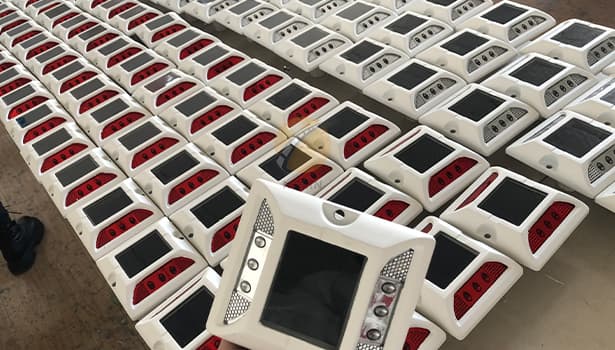
In the solar road stud industry, OEM is not an abstract concept but a clear and practical cooperation model with specific implementation standards. In simple terms, OEM means that the factory provides mature standard solar road stud lights, and customers use their own brands for external sales. The core structure and technical solution of the products are completed by the factory, and customers do not need to participate in the core research and development.
A professional OEM solar road stud light manufacturer usually can provide the following core OEM services:
In the procurement process of OEM solar road stud light, the confusion between "OEM" and "customization" is a pitfall that most buyers will fall into. Clearly defining the boundaries between the two is the key to building trust between the buyer and the seller and is also the foundation for smooth subsequent cooperation.
From the core logic perspective, the differences between the two can be simply summarized as:
OEM mode: Use your brand to sell factory-qualified standardized mature products, the core product attributes cannot be changed;
Customization/ODM mode: According to your specific project requirements, adjust the core parameters and structure of the product, or even redesign the product.
The following table visually presents the differences between OEM and custom solar road stud lights from multiple core procurement dimensions, facilitating buyers to quickly match their own needs:
|
Comparison Dimension |
OEM Solar Road Stud Light |
Custom / ODM Solar Road Stud Light |
|
Product Basis |
Factory standard models (mass-produced, mature products) |
Modified standard models or completely new designs |
|
Customer Engagement |
Low (only confirmation of brand-related requirements is needed) |
High (full coordination of technical requirements and solution confirmation is required) |
|
Modifiable Scope |
Logo, packaging, product model |
Structure, brightness, battery, casing, core technical parameters |
|
Molds |
Existing factory molds, no additional mold investment required |
Exclusive molds for the customer or modified molds shared by agreement |
|
MOQ (Minimum Order Quantity) |
Low (suitable for small and medium batch purchases) |
Higher (to cover R&D and mold development costs) |
|
Delivery Time |
Fast (based on existing production capacity, only branding customization is required) |
Relatively longer (includes design, sample approval, and production preparation stages) |
|
Suitable Customers |
Distributors, traders, start-up brand owners |
Project-based buyers, mature brand owners with stable demand |
Based on the above comparison, the following types of customers choosing the OEM solar road stud light model can achieve the optimal balance of cost, efficiency, and market feedback:
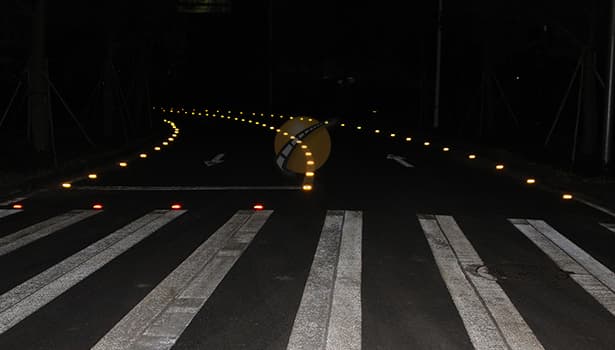
This chapter focuses on the standard product configuration under the OEM model, all of which are mature solutions verified by the factory in the market, ensuring the stability and reliability of batch purchases.
The material selection for OEM products is based on the core principle of "stable and mature, batch-compatible", as follows:
One of the core values of the OEM model is to help buyers build their own brands. The following brand elements directly affect the recognition and acceptance of the brand in the local market.
Compliance in overseas markets is the foundation for the smooth circulation of products. Professional OEM suppliers will provide comprehensive packaging and compliance support:
You can choose neutral packaging (suitable for multi-brand distribution) or customized packaging (suitable for brand promotion of your own products), and the outer boxes all comply with international transportation standards.
Provide common export certifications such as CE and RoHS, and some suppliers can assist in matching the special certification requirements of target markets.
Can adjust the contents of product instructions and certification documents according to local road safety product regulations, ensuring that the products meet the local market entry requirements. Especially for project-based customers, this ability can significantly enhance the competitiveness of the cooperation.
The mature OEM solar road stud light procurement process is simple and efficient, which can minimize the cooperation cycle to the greatest extent. The specific steps are as follows:
The buyer clearly defines the OEM standard model and brand customization requirements (Logo, packaging, etc.).
The buyer provides the source file of the Logo, packaging design requirements, model naming rules, etc. to the supplier.
The supplier produces samples with brand identification, and the buyer verifies the product quality and brand presentation effect.
After the sample confirmation is correct, both parties sign a contract, and the supplier starts batch production.
After production is completed, the supplier conducts batch quality inspection, and qualified products are delivered according to the agreed method.
A1: Yes. If the buyer does not need the brand logo temporarily, they can choose the neutral OEM mode, that is, purchase factory-standard products without adding any brand elements. Later, they can handle the brand logo themselves.
A2: The core difference lies in brand ownership. OEM uses the buyer's own brand; white-labeling is a neutral product without a brand logo. The buyer needs to solve the brand issue themselves, and white-label products usually have less customized support than OEM mode.
A3: Different suppliers have different MOQ requirements. The regular range is 500-1000 pieces. Compared to custom models, OEM's MOQ is lower. Some suppliers can negotiate to reduce the minimum order quantity for long-term cooperation customers.
A4: Yes. If the buyer verifies the market demand through OEM products, and later has personalized parameters or structural requirements, most professional suppliers can provide custom/ODM upgrade services. Based on the previous cooperation foundation, it can shorten the solution integration cycle.

Choosing a reliable supplier is the key to successful OEM procurement. It is recommended to screen based on the following 4 core dimensions to enhance the safety of cooperation:
The supplier must have maturely mass-produced standard solar road stud models that have been verified in the market, with stable quality, and avoid choosing suppliers without fixed standard models and frequent changes in product parameters.
Suppliers with overseas market service experience better understand the regulations, certification requirements, and packaging standards of different regions, which can reduce problems in the export process.
Can clearly define the boundary between OEM and customization, do not confuse the concepts to mislead the buyer, and can precisely match the cooperation mode according to the buyer's needs.
Possessing sufficient production capacity and a stable raw material supply chain, which can guarantee the delivery cycle of batch orders and also be able to meet subsequent replenishment demands.
For most B2B buyers, OEM Solar Road Stud Light is a low-risk, quick-start cooperation model. It does not require buyers to invest in R&D costs, can quickly build their own brand by leveraging the factory's mature product solutions, and has the advantages of low MOQ and fast delivery. It is suitable for the demand for rapid market expansion.
Whether it is a road safety product distributor, an overseas importer, or a start-up brand, the OEM model can precisely match core needs. And after successful market validation in the later stage, it can smoothly upgrade to a custom/ODM model, achieving an advancement from "rapid entry" to "differentiated competition". Choosing a reliable OEM solar road stud light supplier is a key step in opening up the overseas solar road stud market layout.