In many workplaces, safety accidents caused by insufficient lighting during night construction occur frequently. Among these accidents, more than 30% are related to the incorrect use of reflective protective equipment. Behind seemingly ordinary working scenes such as roads under night construction, busy railway lines, and brightly lit but densely populated airport aprons lies multiple risks including vehicle collisions and accidental mechanical injuries. Reflective safety vests, as a fundamental yet crucial personal protective equipment, are building an invisible safety barrier for countless practitioners in high-risk environments with their unique design and functions. Next, Nokin will analyze reflective safety vests from multiple dimensions, taking you to have a comprehensive understanding of their value and function.
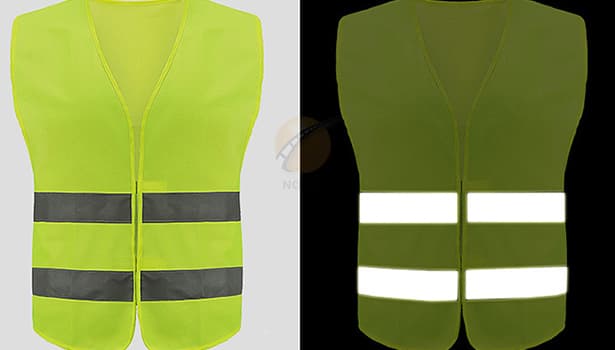
Reflective safety vests are a type of personal protective equipment that combines highly visible fluorescent fabric with special reflective materials. Its core design objective is to maximize the wearer's visibility under various lighting conditions through material properties. Unlike ordinary clothing, it not only has eye-catching colors but also can produce a strong reflective effect when illuminated, allowing the wearer to be quickly identified in complex environments.
The color selection of this type of vest is not random. It often uses fluorescent yellow, orange-red and other colors with extremely strong contrast in nature. Combined with the reflective strips embedded on the surface, it creates a dual warning effect of "actively attracting attention + passively reflecting light". Whether it is a sunny day or a dimly lit night, it can effectively convey the signal that "someone is here".
Reflective safety vests are highly visible protective equipment that can significantly enhance the wearer's visibility in complex and low-light environments, reducing the risk of accidents caused by unclear visibility. So, exactly who needs to wear reflective safety vests? What are the functions of wearing reflective safety vests for them?
The maintenance of roads cannot do without the meticulous care of workers every day. They often have to work in the traffic flow. Cars travel at high speeds and the road conditions are complex, making it easy for their vision to be disturbed. To ensure the safety of highway maintenance workers, enhancing their visibility in traffic is a crucial step. Reflective safety vests, by reflecting the light from vehicle headlights, enable drivers to spot the workers from hundreds of meters away, providing sufficient reaction time to avoid them and prevent collision accidents.
Traffic police are among the groups that need to wear reflective safety vests the most, as they are exposed to complex traffic environments every day and need to be clearly seen by passing vehicles and pedestrians at all times when directing traffic. Especially in traffic congestion or complex road conditions, reflective safety vests can make their positions more prominent, ensuring the safe and efficient conduct of command work and avoiding traffic chaos or accidents caused by drivers' failure to notice traffic police in time.
Road cleaners face the risk of heavy traffic and high speed when working. Reflective safety vests can make them more conspicuous in the driver's field of vision, allowing the driver sufficient time to make evasive responses and fundamentally reducing the possibility of being hit by vehicles.
The sites of disasters such as earthquakes and floods often have chaotic environments and complex lighting. Firefighters wearing reflective safety vests not only enable their teammates to quickly locate each other in the debris, enhancing the efficiency of rescue cooperation, but also allow trapped people buried under to spot rescue workers through gaps, increasing their hope of survival.
When providing rescue at the accident scene, emergency medical personnel need to quickly identify their own positions. Reflective vests can help them be quickly identified among onlookers or passing vehicles, ensuring that rescue channels are not blocked and buying precious time for the injured to receive treatment.
When a truck breaks down on a highway and the driver gets out of the vehicle to inspect or repair it, they face a high risk of being rear-ended by vehicles from behind. Reflective safety vests can enable vehicles behind to spot people on the roadside in advance in high-speed environments with high speeds and limited visibility, significantly reducing the rate of secondary accidents.
Warehouse loaders often operate at night or in low-light indoor conditions, with forklifts, conveyor belts and other equipment constantly running around. Reflective vests can enable equipment operators to promptly notice people nearby, preventing injuries from being squeezed or collided due to blind spots.
When power repair personnel climb power poles or work near high-voltage equipment at night, they need to be constantly watched by ground supervisors and passers-by. Reflective vests can clearly mark their positions, preventing others from accidentally touching the equipment or mistakenly entering dangerous areas.
When municipal gardeners prune the road green belts in the early morning or evening, the lighting conditions are poor, and non-motorized vehicles and pedestrians passing by tend to overlook the operation area. Reflective vests can effectively alert people around to the working area and prevent accidents caused by intrusion.
No matter what kind of occupation it is, as long as the working environment involves risks such as vehicle traffic, insufficient lighting or dense crowds, reflective safety vests are important equipment for ensuring safety. Wearing clothes correctly is not only a responsibility for one's own safety, but also a key measure to enhance the overall safety of the working environment.
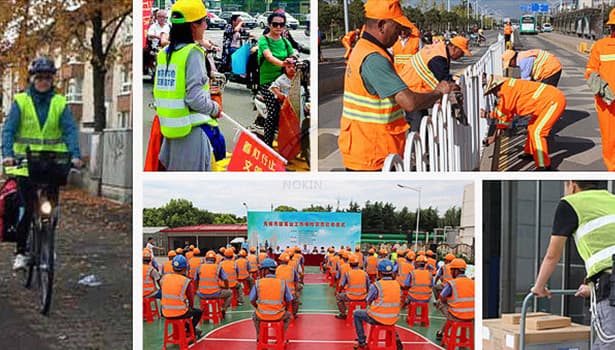
Reflective safety vests are mostly made of thin mesh fabric or breathable fabric. In the hot summer environment, they can reduce the stuffiness of the wearer and ensure comfort during long-term work. In winter, it can also be easily worn over the outer layer of thick coats, maintaining the protective effect without affecting warmth.
High-quality reflective safety vest fabric has certain tear resistance and wear resistance, which can adapt to the friction and pulling in complex environments such as construction sites and outdoor rescue operations, extend the service life and reduce the cost of repeated purchases.
Reflective safety vests within the same unit can distinguish different teams and positions by color or label, facilitating managers to quickly identify the departments to which personnel belong and improving efficiency during emergency assembly and task allocation.
Some reflective safety vests have a basic waterproof coating, which can reduce rainwater infiltration in light rain, keep the fabric dry, and ensure that the reflective strips are not affected by moisture, continuously exerting their reflective function.
When staff members wear reflective safety vests, they not only protect themselves but also send a signal to those around them that "there is a risk here", indirectly reminding others to be vigilant and creating an atmosphere where everyone pays attention to safety together.
The fluorescent yellow, orange-red and other colors on reflective safety vests can absorb scattered light in the environment and re-radiate it, creating a stronger visual stimulation than ordinary colors. This kind of stimulation can break through the visual fatigue threshold of the human eye, quickly capture attention in complex backgrounds, and be detected even at a relatively long distance.
The reflective strips on the vest are composed of countless tiny glass beads or prisms. When light shines, these structures can reflect the light back to the light source in the original direction. For instance, when the car headlights shine on the reflective strips, the light will be reflected back into the driver's eyes, allowing them to clearly see the wearer's position, which is far superior to the diffuse reflection effect of ordinary clothing.
During the day, fluorescent fabrics dominate visibility. At night or in low-light environments, reflective materials play a core role. This "double guarantee" ensures that the wearer can maintain a high level of visibility regardless of how the lighting conditions change, achieving all-weather safety protection.
According to industry standards, outdoor workers such as those engaged in construction and road maintenance must wear reflective safety vests throughout their work, regardless of day or night. Even on cloudy or hazy days, one should not neglect wearing clothes just because "the light looks okay".
If there are risks such as mechanical operation and vehicle passage in indoor work, such as in large warehouses and factory workshops, reflective safety vests should also be worn as required to avoid accidents in blind spots of equipment operation.
When a vehicle breaks down on a highway, the driver and passengers must wear reflective safety vests when getting out of the car to set up warning signs or wait for rescue, especially in low-light environments such as at night or in tunnels.
For large-scale outdoor events such as marathons and open-air concerts, on-site staff and volunteers need to wear reflective safety vests to be identified in the crowd and avoid being accidentally injured by event vehicles or equipment.
|
Occupation / Role |
Work Environment |
Key Professional Requirements |
Recommended ANSI/ISEA 107 Class |
|
Highway Construction Workers |
Beside high-speed traffic |
Large reflective area, long visible distance |
Class 3 |
|
Community Security Guards |
Patrol or direct vehicles within a community |
Basic visibility guarantee |
Class 1 |
|
Railway Track Inspectors |
Around railway tracks with high-speed trains passing |
Strong reflective performance |
Class 3 |
|
Food Delivery Personnel (Night) |
Complex road conditions while riding |
Balance between flexibility and visibility |
Class 2 |
|
Channel Dredgers |
Water platforms with vessel traffic |
Waterproof, stable reflective effect |
Class 2 or Class 3 |
|
Power Inspectors |
Outdoors or near utility poles |
Wear-resistant, scratch-resistant fabric |
Class 2 |
Fluorescent yellow: It has the strongest visual penetration on cloudy days, hazy days and other low-visibility weather conditions, and is suitable for outdoor long-term operations, such as road construction and railway inspection.
Orange-red: It has high recognizability in direct sunlight and is often used in emergency service scenarios such as fire fighting and rescue, capable of quickly conveying the signal of "emergency handling".
Blue: It is mostly used in service positions such as security and property management. It not only ensures visibility but also distinguishes itself from the warning color for high-risk operations.
|
Class |
Reflective Area |
Suitable Environments |
Typical Examples |
Visibility Range |
|
Class 1 |
Smallest |
Low-risk, simple environments with no high-speed vehicles or heavy machinery nearby |
Security patrols in residential areas, internal guidance in shopping malls |
— |
|
Class 2 |
Medium |
Areas with some vehicle traffic at relatively slow speeds |
Internal factory operations, municipal greenery pruning |
50–100 meters |
|
Class 3 |
Largest |
High-risk environments with high-speed traffic or poor visibility conditions |
Highway construction, long-distance vehicle maintenance at night |
Over 150 meters |
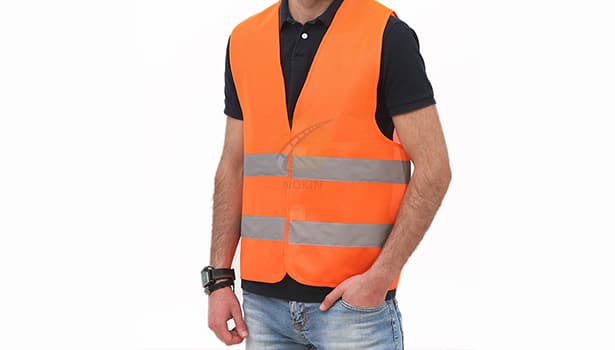
Although reflective safety vests are not complex high-tech products, they play an irreplaceable role in ensuring the safety of people in high-risk environments. Its value is not only reflected in the physical aspect of collision prevention, but also in building a safety line through visual warnings, providing every practitioner with an additional layer of protection in the face of danger.
When choosing a suitable reflective safety vest, it is not only necessary to consider the professional requirements and environmental characteristics, but also to develop the safety habit of wearing it at all times. Whether they are industry managers or front-line workers, they should all attach importance to the use of this basic protective equipment, making reflective safety vests truly become "guardians of life" in high-risk environments.