Traffic cones are a very common type of road safety facility. They are flexible, lightweight, highly mobile and visible, playing a significant role in maintaining traffic safety. However, in practical applications, improperly maintained traffic safety cones often encounter many problems. These issues not only reduce the visibility of the traffic cones but also weaken their safety warning effect. Compliance risks may also be triggered due to non-compliance with industry safety standards. More importantly, frequently replacing damaged traffic cones will significantly increase the procurement costs for enterprises and management departments. Therefore, mastering scientific traffic cone maintenance methods is not only a necessary measure to ensure road safety but also an effective way to achieve cost optimization.
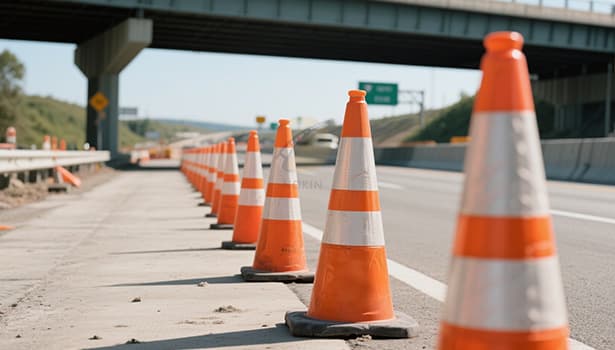
At present, the mainstream materials for traffic cones in the market mainly include PVC, rubber and high-density polyethylene. Different materials have significant differences in weather resistance, UV resistance and elasticity, and their applicable scenarios are also different.
|
Material |
Weather Resistance |
UV Resistance |
Elasticity |
Applicable Scenarios |
|
Medium-quality PVC |
Good |
Moderate |
Good |
Suitable for urban low-speed roads and temporary activity venues |
|
Rubber |
Excellent |
Good |
Excellent |
Ideal for areas with heavy rain or snow, and for scenarios requiring frequent transportation |
|
High-density polyethylene (HDPE) |
Excellent |
Excellent |
Moderate |
Suitable for medium and high-speed highways and long-term outdoor construction areas |
When purchasing traffic road cones, priority should be given to core performance indicators. It is recommended to choose models with UV resistance to avoid material brittleness and fading after long-term exposure to the sun. Meanwhile, the weighted base can enhance the stability of the traffic cone in windy weather and prevent it from toppling over. The firm reflective strips directly affect the warning effect at night and in low visibility environments. It is necessary to ensure that they are tightly adhered and not easy to fall off.
The height of traffic cones directly determines their warning range and applicable road sections. They should be reasonably selected based on road speed and scene requirements.
Suitable for urban low-speed roads, parking lots and temporary event sites. In such scenarios, the vehicle speed is relatively low. A height of 500mm is sufficient for drivers and pedestrians to clearly identify the vehicle, and it is also flexible and convenient to handle.
Mainly used on urban main roads and expressways. This height enables drivers to notice road changes in advance in medium-speed driving scenarios, leaving sufficient time for deceleration and lane changing.
Specially designed for expressways. On expressways, the speed is high and the view is wide. A height of 1000mm can enhance the long-distance recognition of traffic cones, ensuring that drivers have sufficient reaction time.
When selecting a model, the principle of "the higher the vehicle speed, the higher the height" should be followed. At the same time, the usage duration and environmental factors should be taken into account. For example, for long-term outdoor use, models with high weather resistance materials should be given priority.
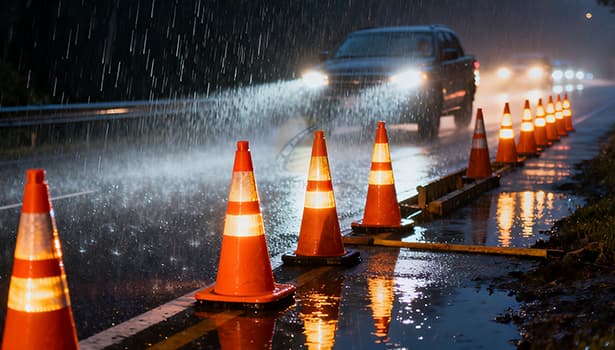
The cleaning frequency of traffic cones should be adjusted according to the usage environment. The core principle is "to keep the surface clean without affecting the color and reflective effect."
The cleaning method should be gentle to avoid damaging the material of the foldable traffic cones and the reflective film. The specific steps are as follows:
Rinse the surface of the traffic cones with clean water to remove floating dust and debris.
Prepare a mild soapy water or neutral detergent and gently wipe the surface with a soft cloth or sponge.
Rinse thoroughly with clean water again to ensure there is no detergent residue.
After cleaning, place the traffic road cones in a well-ventilated and dry area to air dry. They can only be stored in the warehouse or reused after they are completely dry.
It should be particularly noted that the use of strong acids, strong alkalis or solvent-based cleaners (such as gasoline or alcohol for direct wiping) is strictly prohibited. These cleaners can degrade materials like PVC and polyethylene, and at the same time damage the reflective layer of the reflective strip, causing it to fail.
When dealing with stubborn stains (such as dried mud, oil stains) or adherents (such as leftover tape), targeted cleaning techniques should be adopted to avoid violent wiping that may damage the traffic cones.
First, soak the traffic cone in warm water for 5 to 10 minutes to soften the stains. Then, use a soft brush (such as a toothbrush or plastic brush) in warm soapy water to gently scrub the stained area. If the stains are still not removed, you can use a special plastic cleaner (make sure the cleaner does not contain corrosive components). Spray it and let it stand for a moment before scrubbing. Be sure to avoid the reflective strip area.
For sticky substances such as tape residue, you can first moisten a soft cloth with warm water and gently wipe it. If it cannot be removed, you can dip a small amount of alcohol (with a concentration of less than 75%) and gently wipe it. Before operation, a test should be conducted on an inconspicuous part of the traffic cone to ensure that alcohol does not cause color fading or material damage. Only then can it be used to clean adhered substances.
After cleaning, it should be rinsed with clean water in time and dried with a dry cloth to avoid long-term damage to the material caused by the residue of cleaning agents or alcohol.
Regular inspection is the core link in the maintenance of traffic safety cones. It is recommended to carry it out simultaneously with cleaning work every month. The inspection content can be divided into two categories: "appearance inspection" and "functional inspection". It can be made into a printable/Excel "maintenance check-in form" to ensure that no inspection is missed.
|
Inspection Category |
Inspection Item |
Judgment Criteria |
|
Visual Inspection |
Check for cracks or deformations |
No obvious cracks, severe depressions, bends, or other deformations |
|
Visual Inspection |
Check surface color |
Surface color is bright and clear, with no large-scale fading or yellowing |
|
Visual Inspection |
Check reflective strip condition |
Reflective strip is not detached or lifted; surface is clean without stains; reflective effect is normal |
|
Visual Inspection |
Check base condition |
Base is not loose or missing parts; firmly connected to the cone |
|
Functional Check |
Stability |
When placed on flat ground, the cone remains stable without tipping and can resist slight wind force |
|
Functional Check |
Stacking and transportation |
Can be stacked in a standard way; no components fall off or are damaged during handling |
When inspecting, each traffic cone should be numbered and recorded one by one. For traffic cones with problems, specific damage items should be marked to facilitate subsequent repair or replacement.
For slightly damaged foldable traffic cones, timely repair can extend their service life and reduce replacement costs. There are two common repair methods:
If the reflective strip only shows slight lifting, first clean the surface of the reflective strip and the cone to remove dust and oil stains, and then firmly stick it with a special strong adhesive (such as 3M adhesive). If the reflective strips show local detachment or wear, high-performance reflective rolls of the same specification can be cut to cover the damaged area and adhered tightly to ensure consistent reflective effect.
For small cracks on the surface of the cone (less than 5cm in length and less than 1mm in width), special plastic repair glue (which needs to match the material of the traffic cone, such as PVC special glue or polyethylene special glue) can be used. Apply the glue evenly to the crack area. After the glue has cured, gently sand it smooth with sandpaper to restore the integrity of the cone.
In addition, there are professional traffic road cone repair equipment and technologies available on the market, such as air cushion repair technology, which can repair minor deformations of cones through air pressure and is suitable for batch repair of traffic cones made of rubber or high-density polyethylene.
When traffic cones exhibit the following conditions, repair can no longer guarantee their safety warning effect and structural stability. They need to be replaced immediately to avoid potential safety hazards and compliance risks:
Large-scale cracks (longer than 5cm) or fractures occur in the cone, or the connection between the base and the cone becomes loose and cannot be fixed, resulting in the traffic cone being unable to be placed stably.
Large areas of reflective strips fall off or wear out, or the reflective layer ages and fails. Even after cleaning, it cannot achieve the normal reflective effect, especially at night or in low visibility environments, the warning function drops significantly.
The surface color of the cone is severely yellowed and darkened, with a significant deviation from the standard color. The long-distance recognition is significantly reduced, failing to meet the safety standards of the industry.
The used traffic cones after replacement should be disposed of in accordance with environmental protection requirements. You can contact professional recycling agencies for material recycling to reduce the environmental burden.
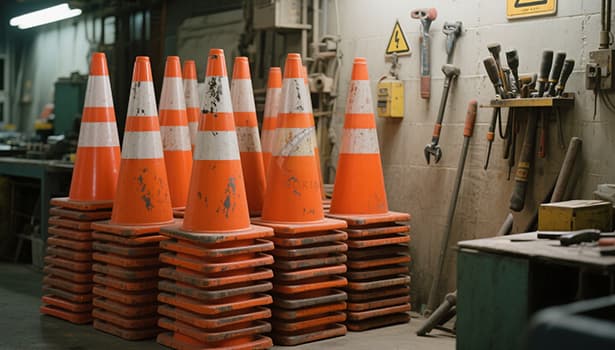
It is preferred to store upright to reduce the risk of deformation of the cone's side walls under pressure, especially suitable for traffic cones made of rubber and PVC materials. If the storage space is limited and stacking is required, it is necessary to strictly follow the stacking height and method recommended by the manufacturer. The industry's general recommendation is that the stacking height should not exceed 1.5 meters. Avoid concentrating heavy pressure on the bottom traffic cone to prevent irreversible deformation or cracking of the cone.
The storage area should be kept dry and well-ventilated to avoid damp environments - dampness can easily cause the material of traffic cones to mold and accelerate aging. Meanwhile, the storage area should be protected from light to prevent the material of the traffic cones from becoming brittle and their color from fading due to long-term exposure to ultraviolet rays. In addition, the storage area should be kept away from sharp objects and high-temperature equipment to prevent the surface of the foldable traffic cones from being scratched or the material from softening or deforming due to high-temperature baking.
When handling traffic cones, they should be lifted and placed gently to avoid forceful throwing or collision. Especially for rubber traffic cones, although they have good elasticity, frequent and violent collisions can still cause damage to the internal structure and shorten their service life.
Outdoor traffic cones are exposed to the natural environment for a long time and need to take targeted protective measures to avoid damage caused by weather factors.
When traffic cones are used in outdoor environments, long-term direct exposure to sunlight will cause the material of the traffic cones to become brittle, the color to fade, and even the reflective strips may age and fail due to ultraviolet radiation. Therefore, the traffic safety cone manufacturer reminds all users that when not in use, traffic cones should be promptly stored indoors. If they need to be used outdoors for a long time, a UV protective coating can be applied to the surface of the traffic cones to minimize the damage caused by ultraviolet rays.
During the rainy season, there is a lot of rain. Traffic cones used on the ground are prone to being soaked by accumulated water, which will accelerate the aging of the material of the foldable traffic cones, especially at the connection between the base and the cone. Therefore, after use in rainy days, please dry the surface moisture of the traffic cones in time to avoid water residue. When storing, they should be kept in a dry environment.
The cold weather in winter can also cause significant damage to traffic cones. Low temperatures can easily lead to ice formation on the surface of traffic road cones and make the material brittle. When subjected to external impacts, they are more prone to breakage. Therefore, traffic cone manufacturers also suggest that you bring the traffic cones indoors before the arrival of icy and snowy weather. If it is necessary to use them outdoors, you can apply antifreeze on the surface of the traffic cones. And clean the ice and snow on the surface in time after use to avoid freezing and damaging the traffic cones.
A reasonable deployment and rotation strategy can balance the usage frequency of traffic cones, reduce the wear of individual traffic cones, and extend the overall service life. Specifically, it can be implemented from the following 3 aspects:
For high-frequency usage areas (such as long-term construction sections and fixed traffic control points), a traffic cone rotation system shall be implemented. For instance, divide the traffic cones within the area into 2 to 3 groups and rotate them every two weeks to ensure that the idle traffic cones have sufficient "rest time" and prevent the accelerated aging of the material due to long-term use.
According to the demands of different scenarios, match dedicated traffic cones to avoid excessive wear and tear caused by "misuse". For instance, in night or low-visibility scenarios, traffic cones with high-grade reflective strips or those that can be equipped with LED lights should be used. These traffic cones have stronger reflective and warning effects and do not rely on the frequent use of ordinary traffic cones. For regular daytime scenarios, ordinary weather-resistant traffic cones can be used to achieve optimal resource allocation.
Establish a usage file for foldable traffic cones, recording information such as the purchase date, usage area, maintenance frequency, and repair history of each set of traffic cones. Through data analysis, the usage intensity and wear rate of traffic cones are determined to provide a basis for purchasing new cones and reporting old ones, avoiding blind purchasing or excessive use of damaged traffic cones.
The maintenance of traffic cones may seem simple, but it is a key link in ensuring road safety and controlling operating costs. Through scientific cleaning and maintenance, regular inspection and repair, reasonable storage, transportation and deployment rotation, not only can the service life of traffic cones be extended to ensure they meet compliance and safety standards, but also the procurement and disposal costs can be significantly reduced, while reducing the environmental burden.
From a safety perspective, well-maintained traffic cones can maintain a clear warning effect in various scenarios, effectively guide the passage of vehicles and pedestrians, and reduce the risk of accidents. From a cost perspective, the extended lifespan and reduced procurement costs brought about by maintenance can save considerable expenses for enterprises and management departments.