In the intelligent transportation system, solar road studs are key facilities to ensure the safety of road passage at night and in bad weather. With the continuous growth of global demand for solar-powered road studs, purchasers often encounter the confusion of "large price differences" : the unit prices of solar road cat eyes of the same specification may vary by several times, and the core reason lies in the differences in cost influencing factors.
For municipal transportation departments and road construction enterprises, the procurement cost of solar-powered road studs directly affects the project budget. However, simply pursuing low prices can easily lead to "bad money driving out good" : Some low-priced road studs experience problems such as LED attenuation, shell cracking, and battery failure after 1-2 years of use, which instead increases the maintenance costs in the later stage. Therefore, a thorough understanding of the core factors influencing the cost of solar road cat eyes and balancing the "initial investment" with the "long-term cost-effectiveness" have become the key to procurement decisions.
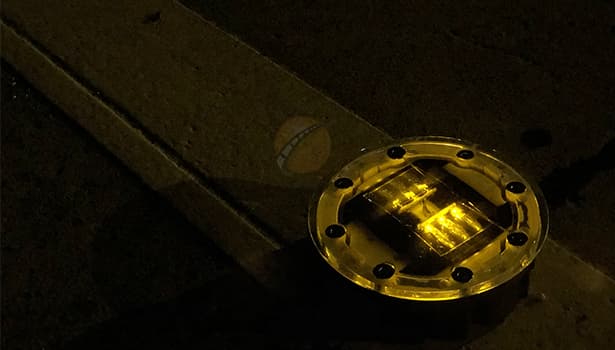
The performance and lifespan of solar road studs rely on core components. The quality differences of components directly lead to cost stratification. Among them, LED beads, solar panels, and batteries are the three key components, and their materials, processes, and performance indicators will significantly affect the cost.
|
Dimension |
Ordinary LED Beads |
High-Quality LED Beads |
|
Luminous Flux & Energy Consumption |
Low luminous flux, relatively high energy consumption; poor warning effect in low-light conditions |
High luminous flux, low energy consumption; maintains clear warning effect in low-light conditions |
|
Environmental Adaptability |
Prone to flickering at low temperatures (below -20℃); rapid brightness attenuation at high temperatures (above 60℃) |
Uses industrial-grade chips; adapts to a wide temperature range with stable performance |
|
Lifespan |
Approximately 2–3 years |
5–8 years |
|
Cost & Long-Term Investment |
Low procurement cost but frequent replacement; high long-term usage cost |
High procurement cost but long lifespan; low long-term usage cost |
|
Protective Design |
General encapsulation; easily affected by rainwater infiltration and corrosion; high failure rate |
Waterproof and anti-corrosion designs (e.g., adhesive encapsulation); suitable for rainy and high-humidity areas; low failure rate |
Solar panels are responsible for "energy collection", and their conversion efficiency and outdoor protection capabilities determine the endurance stability of the road studs. Both will increase the cost.
The conversion efficiency of monocrystalline silicon solar panels is significantly higher than that of polycrystalline silicon panels. They can still be effectively charged in cloudy and low-light conditions, making them suitable for regions with poor lighting conditions such as high latitudes and rainy areas. However, their production process is more complex and the cost is also higher. Although polycrystalline silicon solar panels have a relatively low cost, their low-light performance is poor. In scenarios with insufficient light, they are prone to the problem of "insufficient power causing no light at night", which instead increases the frequency of maintenance.
Long-term exposure to sunlight and rain outdoors will accelerate the aging of the solar panels. Therefore, it is necessary to cover them with anti-ultraviolet and anti-impact coatings (such as tempered glass + PET composite film). Although this type of coating will increase the cost, it can prevent the surface of the board from cracking and the light transmittance from decreasing, extend the lifespan of the solar panel from 3 years to over 5 years, and reduce the replacement cost.
The battery is the "energy storage warehouse" of solar cat eyes road studs. Type, capacity and cycle life are the core indicators affecting the cost. Currently, the mainstream batteries are divided into lithium-ion batteries and traditional lead-acid batteries. The specific differences are shown in the following table:
|
Battery Type |
Energy Density (Wh/kg) |
Cycle Life (times) |
Applicable Scenarios |
Cost Characteristics |
Maintenance Frequency |
|
Lithium-ion Battery |
150–200 |
1000+ (80% capacity retention) |
Suitable for all scenarios; especially effective in low-temperature regions (complex materials and processes) |
High cost |
Replacement every 3–5 years |
|
Lead-acid Battery |
30–50 |
300–500 |
More suitable for warm regions and low-load scenarios (low material cost) |
Low cost |
Replacement every 1–2 years |
|
Low-temperature Dedicated Lithium Battery |
120–180 |
800+ (usable at -30℃) |
Best for northern winters and high-latitude regions (optimized electrolyte) |
Medium cost |
Replacement every ~3 years |
Environmental adaptability: For low-temperature regions, low-temperature-specific lithium batteries should be used. The electrolyte formula of these batteries has been specially optimized and can be charged and discharged normally at -30 ℃. This adaptability design will further increase the battery cost, but it can avoid the problem of ordinary batteries cracking and being unable to discharge in winter, ensuring the normal operation of solar road cat eyes in winter.
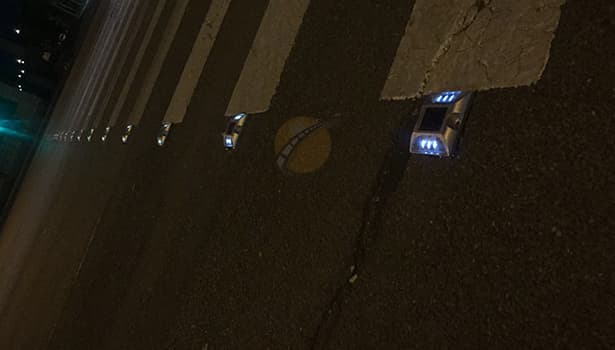
Solar-powered road studs are exposed to the outdoors for a long time and need to withstand tests such as vehicle rolling, rain immersion, and sudden temperature changes. Therefore, the shell material, pressure-resistant structure, and waterproof design all need to be specially considered. These designs and material choices directly increase the cost, but they are also the key to ensuring durability.
The outer shell serves as the "first line of defense" for solar cat eyes road studs. The strength and weather resistance of the material directly determine the lifespan of the road studs. The costs of different materials vary significantly. The specific parameter comparisons are as follows:
|
Shell Material |
Compressive Strength (tons) |
Service Life (years) |
Applicable Scenarios |
Weather Resistance (Sun/Rain) |
Cost Characteristics |
|
ABS Engineering Plastic |
5–8 |
3–5 |
Rural roads, parking lots |
Generally resistant, but prone to aging and brittleness |
Low |
|
Aluminum Alloy (Anodized) |
10–15 |
8–10 |
Expressways and main urban roads |
Good resistance to corrosion and aging |
Medium |
|
Stainless Steel |
15–20 |
10+ |
Airport runways, port terminals |
Excellent resistance to acid, alkali, and rust |
High |
The differences in vehicle loads on various roads (such as rural roads and expressways) require solar road cat eyes to adopt differentiated pressure-resistant designs. The design for heavy-load scenarios will significantly increase costs:
Rainwater infiltration is the main cause of internal component failure of road studs. Therefore, the waterproof design needs to reach the IP68 grade. The realization of this standard requires cost investment in multiple links:
Although these waterproof designs will increase costs, they can reduce the failure probability of solar road cat eyes caused by water ingress from 30% to less than 5%, significantly reducing the frequency and cost of maintenance. They are a necessary investment for outdoor solar-powered road studs.
The installation methods of solar-powered road studs are divided into embedded and surface adhesive types. The complexity of the construction processes of the two is significantly different, which directly affects labor costs and material consumption, and thus changes the total project investment. The specific comparison is as follows:
|
Installation Method |
Construction Process |
Labor Cost (per piece) |
Material Consumption |
Construction Period (per km) |
Applicable Scenarios |
Additional Risks |
|
Embedded Road Stud |
Road surface cutting → cleaning → fixing → backfilling → maintenance |
High |
Cutting consumables, epoxy resin, asphalt |
3–5 days |
New roads, long-term usage scenarios |
May damage underground pipelines |
|
Surface Adhesive Road Stud |
Road surface cleaning → gluing → pasting → static curing |
Low |
Special strong adhesive only |
< 1 day |
Road renovation, temporary diversion sections |
No risk of road excavation |
Compared with traditional wired road studs, solar-powered road studs do not require cable laying, simplifying the installation process from the root and reducing costs:

With the advancement of "smart city" construction, the demand for solar road cat eyes with intelligent functions is on the rise. Such functions are achieved by integrating additional components, which will significantly increase costs but also bring higher application value.
Solar-powered road studs with data collection functions need to integrate multiple sensors and wireless transmission modules, and these components will increase the cost:
Some high-end solar-powered road studs also integrate functions such as automatic fault alarm (real-time reporting when LED or battery failure occurs) and remote control (remote adjustment of light brightness and flashing frequency). Each function requires additional chips and software support, further increasing costs. The purchaser should make a choice based on actual needs. For instance, for ordinary rural roads, there is no need for data collection functions, and the basic model can be selected. Urban main roads and expressways can selectively be equipped with necessary intelligent functions based on management requirements to avoid cost waste caused by "functional redundancy".
The initial cost of solar led road studs is usually higher than that of traditional road studs. However, due to their superior durability and self-sustaining characteristics, their long-term maintenance cost is significantly lower. The cost-effectiveness should be evaluated from the perspective of "total cost of ownership" (initial cost + long-term maintenance cost). The specific comparison is as follows (with a 10-year usage cycle) :
|
Road Stud Type |
Initial Cost Characteristics |
Average Annual Maintenance Cost |
Total Cost of Ownership (10 years) |
Core Advantages |
Applicable Scenarios |
|
Ordinary Traditional Road Studs |
Low initial cost |
High (frequent replacement) |
High |
Low upfront investment |
Temporary sections, low-budget projects |
|
Solar-Powered Road Studs (Basic Model) |
Medium |
Low (mainly cleaning + battery replacement) |
Low |
Low long-term maintenance cost |
Rural roads, parking lots |
|
Solar-Powered Road Studs (High-End Model) |
High |
Low (strong durability, few malfunctions) |
Medium to High |
Long service life, high durability |
Highways, main urban roads |
In suburban areas, remote sections of roads or regions with complex public security, solar-powered road studs are prone to theft and malicious damage. Therefore, additional anti-vandalism and anti-theft designs are required. These designs will increase costs, but they can significantly reduce the replacement losses caused by theft and damage.
Anti-vandalism and anti-theft design should start from two aspects: fixation methods and alarm mechanisms, both of which will increase costs.
Although it increases costs, the anti-theft design can significantly reduce the losses caused by theft. When roads are not equipped with anti-theft designs, the monthly theft rate of road studs reaches 5%, and funds need to be invested every month to replace the stolen solar road cat eyes. After installing anti-theft screws and vibration alarms, the monthly theft rate dropped to 0.5%, and the monthly replacement cost was only one-tenth of the previous one. The additional investment in anti-theft design could be recovered in the short term, and the long-term benefits were significant.
In recent years, the technological iteration and large-scale production of the core components of solar road studs have continuously driven down costs.

The procurement of solar-powered road studs should be tailor-made, taking into account the usage scenarios, budget and service life for a comprehensive assessment. Only in this way can the goal of "reasonable cost, performance meeting standards and long-term peace of mind" be achieved, providing stable support for road safety and traffic management. If you still have doubts about the purchase of solar-powered road studs, please contact NOKIN TRAFFIC. We will tailor a road safety solution for you.