In scenarios such as construction, road maintenance, and logistics loading and unloading, low light and complex environments are often the "hidden killers" of safety accidents. According to data from the China Academy of Safety Science and Technology, about 60% of operation accidents in night or low-light environments are related to the "insufficient visibility" of the operators. Wearing a reflective safety vest that meets the standards correctly can reduce the risk of such accidents by more than 75%.
However, in reality, many people have a biased understanding of reflective safety vests: some think that "as long as there are reflective strips, it's fine", ignoring compliance with standards; Some people casually put the vest on the inside of their clothes, causing the reflective effect to fail. There are still people who have been using damaged vests for a long time without realizing that they have lost their protective ability.
Nokin will provide a professional and easy-to-understand guide for the use of reflective safety vests from two major dimensions: "selection skills" and "wearing norms", to help enterprises and individuals truly leverage their safety protection value.
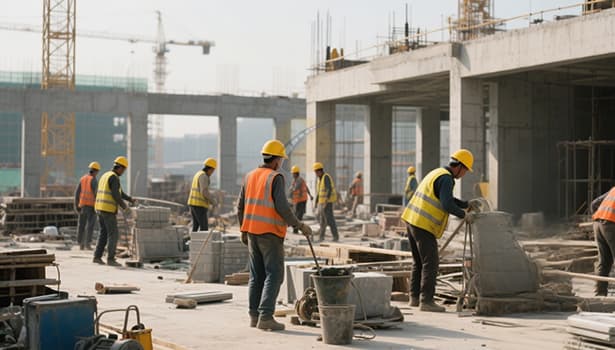
The "safety" of reflective safety vests primarily stems from compliance - they must meet authoritative safety standards, which is the foundation for ensuring visibility. At present, the most widely used standard worldwide is ANSI/ISEA 107-2020, which has clear requirements for the reflective performance, color and structure of vests.
Different working scenarios have different requirements for standard grades. Blindly choosing high-grade products will increase costs, while choosing low-grade ones may pose safety hazards. The following table clearly lists the grade classification and applicable scenarios of ANSI/ISEA 107-2020:
|
Class/Level |
Reflective Materials (㎡) |
Fluorescent Materials (㎡) |
Applicable Scenarios |
|
Class 1 (Level 1) |
≥ 0.10 |
≥ 0.50 |
Low-risk environments: parking lot command, shopping mall inventory, low-speed areas (≤ 40 km/h) |
|
Class 2 (Level 2) |
≥ 0.20 |
≥ 0.83 |
Medium-risk environments: municipal maintenance, logistics loading/unloading, urban road construction (40–60 km/h) |
|
Class 3 (Level 3) |
≥ 0.32 |
≥ 1.29 |
High-risk environments: highway construction, night road rescue, suburban expressway operations (≥ 60 km/h) |
For example, when conducting greenery pruning on urban main roads (with a speed limit of 50km/h), a Class 2 standard vest is sufficient. If maintenance work is carried out on expressways (with a speed limit of 120km/h), Class 3 standard products must be selected; otherwise, the reflective distance will be insufficient to provide sufficient reaction time for motor vehicle drivers.
Fluorescent color is the "core identification color" of reflective safety vests. Its principle is to absorb and reflect more light through highly saturated colors, quickly attracting attention in complex environments. However, not all fluorescent colors are suitable for all scenarios. The selection should be based on the "background color" of the working environment to avoid visual fusion.
According to the requirements of GB 20653-2020, the background color of reflective safety vests should be "fluorescent yellow", "fluorescent orange" or "fluorescent red", among which fluorescent yellow and fluorescent orange have the widest applicability:
Some merchants will launch "light yellow" and "light orange" colored vests. They seem similar, but in fact, they do not have fluorescent properties - in low-light conditions, the visible distance of these colors is only one-third of that of fluorescent colors, which cannot meet safety requirements. In addition, dark-colored vests such as black and gray, even if they have reflective strips, are not suitable as the main color, as the background color cannot provide sufficient visual warning during the day.
Reflective materials are the "core functional layer" of vests in low-light environments such as at night, in tunnels, and during rainy days. Their quality and quantity directly determine the visible distance. When making a selection, two major indicators should be given special attention: "material type (including specific categories)" and "coverage range".
Reflective materials can be classified into "glass microsphere type" and "microprism type" based on their core principles. Common high-reflective tapes and silver reflective tapes on the market all fall under the specific application categories of these two types of principles. The performance and applicable scenarios of different categories vary significantly. Please choose according to your needs
|
Material Category |
Core Principle Type |
Reflectivity (cd/(lx·m²)) |
Weather Resistance (High/Low Temperature) |
Wear Resistance (Coefficient) |
Applicable Scenarios |
Precautions |
|
High Reflective Tape |
Microprism |
300–500 |
-30℃ ~ 80℃ |
Excellent (≥ 0.8) |
Industrial-grade: highway construction, night rescue, mechanical operation |
Must comply with ANSI/ISEA Class 3 standards; prohibited for temporary scenarios |
|
Silver Reflective Tape |
Glass Microsphere |
80–150 |
-20℃ ~ 60℃ |
Moderate (0.5–0.7) |
Civilian/temporary: night cycling, temporary construction warning |
Prone to fading outdoors; recommended inspection every six months |
|
Heat Transfer Reflective Film |
Microprism |
250–400 |
-25℃ ~ 70℃ |
Good (0.6–0.8) |
Close-fitting vest: power inspection, garden maintenance (frequent activities) |
Not resistant to high-temperature washing (above 30℃ may cause peeling); hand wash required |
|
PVC Reflective Tape |
Glass Microsphere |
100–200 |
-40℃ ~ 90℃ |
Excellent (≥ 0.9) |
Harsh environments: extremely cold region construction, chemical workshops (anti-corrosion) |
Material is relatively hard; adhesion slightly poor, arc-shaped cut style recommended |
|
Warning Tape (Reflective Type) |
Glass Microsphere |
50–100 |
-10℃ ~ 50℃ |
Poor (< 0.5) |
Temporary warning: temporary site area division, temporary equipment marking |
Not meeting industrial-grade safety standards; prohibited as main reflective material for vests |
No matter which reflective material is chosen, it is necessary to ensure that it covers key visible areas such as the "front and rear of the trunk, shoulders, and near the cuffs", and there are no breaks. Take the ANSI/ISEA Class 2 standard as an example. The "horizontal reflective strips" of the vest should encircle the trunk once, and the "vertical reflective strips" should extend from the shoulders to the waist. The width of each reflective strip should be no less than 5cm, and the distance between adjacent reflective strips should not exceed 15cm.
Special attention should be paid:
If reflective strips are made with warning tape, even if the coverage meets the standards, due to insufficient reflectivity (< 100cd/(lx·m²)), they cannot meet the industrial-grade safety standards and can only be used for temporary warnings. It is prohibited to replace regular reflective vests.
The heat transfer reflective film must ensure that the transfer area is complete. If there are local missed prints or bubbles, it will cause reflective breaks and needs to be replaced immediately to avoid creating blind spots.
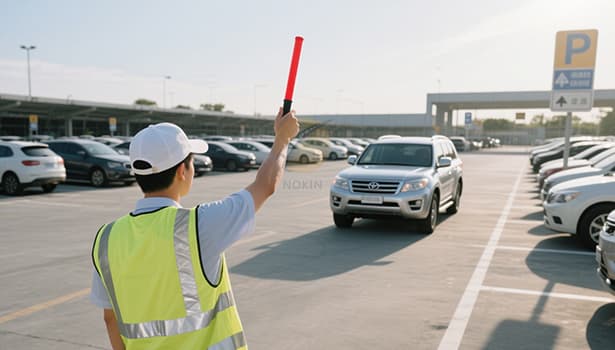
The functional requirements for vests vary greatly across different working scenarios. Blindly choosing an "all-round model" will increase costs, while opting for a "basic model" may not be able to handle special risks. The following comparison of the four mainstream types of vests can help you quickly match the scene
|
Vest Category |
Core Functions |
Applicable Scenarios |
Recommended Reflective Material Category |
|
High-Visibility Warning Vest (Basic Model) |
Basic reflective + fluorescent warning |
Parking lot command, shopping mall inventory, low-speed areas (≤ 40 km/h) |
Silver reflective tape |
|
Professional Work Protection Vest (Functional Version) |
Reflective + professional protection (arc prevention, corrosion prevention) |
Power maintenance, chemical operations, high-altitude work |
Heat transfer reflective film, PVC reflective tape |
|
Lightweight Emergency Vest (Portable Version) |
Reflective + lightweight + easy to store |
Night cycling, outdoor hiking, temporary fieldwork |
Silver reflective tape, reflective warning tape |
|
Multi-Functional Integrated Vest (Comprehensive Version) |
Reflective + protective + storage + communication |
Road traffic police, emergency rescue, field exploration |
High reflective tape, PVC reflective tape |
For instance, power maintenance personnel need to choose "professional operation protective vests", paired with heat transfer reflective film, which has a high degree of adhesion and does not affect operation. Moreover, the arc-resistant fabric can deal with the risk of short circuits in the circuit. For the maintenance of expressways in Northeast China during winter, it is necessary to choose a "multi-functional integrated vest", which is equipped with PVC reflective tape and can withstand a severe cold of -40 ℃. At the same time, it has an internal insulation layer, taking into account both safety and warmth.
Ill-fitting reflective safety vests not only affect comfort but may also weaken the protective effect: if they are too tight, they can restrict limb movement, causing movement distortion during work. If it is too loose, the reflective strip may shift or even get caught by the equipment during operation.
When choosing, one should consider the "wearing condition during work" - if cotton-padded clothes or sweaters are needed for winter work, a vest that is 1-2 sizes larger than the usual size should be selected. If you only wear short-sleeved work clothes in summer, just choose a size that fits you well.
It is recommended to refer to the "chest circumference and waist circumference" parameters of the vest for selection (rather than just looking at "M/L/XL")
For workers with special body types (such as those with a chest circumference exceeding 120cm), it is necessary to choose the "extra size (XXL and above)" custom-made style to avoid the vest not covering the trunk due to insufficient size.
High-quality safety vests are specially designed in areas such as the armpits, waist, and cuffs.
When making a purchase, you can try it on: raise your hand to the top of your head, bend down 90 degrees, and turn around 180 degrees. If there is no sense of restraint in these actions and the reflective strip remains flat all the time, it indicates that the style is qualified.
Additional functions are not necessarily "the more, the better". They should be selected based on the "high-frequency demands" of the operation scenarios to avoid paying for useless functions. The following are common scenarios for adapting additional functions:
|
Additional Function |
Adapted Scenarios |
|
Categorizes and stores tools, mobile phones, certificates; municipal maintenance (pliers, tape measures); traffic police (law enforcement recorders) |
|
|
Transparent ID window |
Displays work ID without removal; suitable for shopping mall security and park inspection |
|
Microphone buckle/Walkie-talkie hanging ring |
Fixes communication equipment to prevent shaking; suitable for road traffic police and emergency rescue |
|
Emergency stripping design |
Enables quick vest removal in case of hooking; suitable for mechanical operation and high-altitude work |
|
Breathable mesh fabric |
Enhances heat dissipation; suitable for outdoor work and high-temperature workshops in summer |
For instance, when working at construction sites in summer, choosing a vest made of "breathable mesh fabric" can reduce the risk of heatstroke. In mechanical operation scenarios, the "emergency stripping design" enables the operator to quickly detaching when the vest is caught by the machine, avoiding being dragged and injured.
The core requirement of a reflective safety vest is that "reflective elements are unobstructed", so it must be worn on the outermost layer of all clothing - including work clothes, coats, safety suits, etc. It cannot be worn on the inside of sweaters or cotton-padded clothes, nor can it be blocked by backpacks, tool bags, safety ropes, etc.
If the closure parts (zippers, Velcro, buttons) of the reflective safety vest are not fastened tightly, they may fall off during operation or be caught by equipment, causing danger. The operation specifications for different closure components are as follows:
|
Inspection Item |
Key Points |
|
Zipper |
Pull the zipper to the top; ensure the zipper pull is securely fastened; smooth operation with no lag and no gap at the top |
|
Velcro |
Fits perfectly with an overlap width ≥ 3 cm; no loosening when pulled; no hair or dust adhesion |
|
Buttons/Snap Fasteners |
All fastened tightly without omissions; no loose buttons; no tears in the buttonholes |
In addition, if frequent bending over is required during work (such as municipal road paving), the waist elastic band can be adjusted to fix the hem of the vest at the waist to prevent the hem from flipping up when bending over, exposing the waist and resulting in an incomplete reflective area of the trunk.
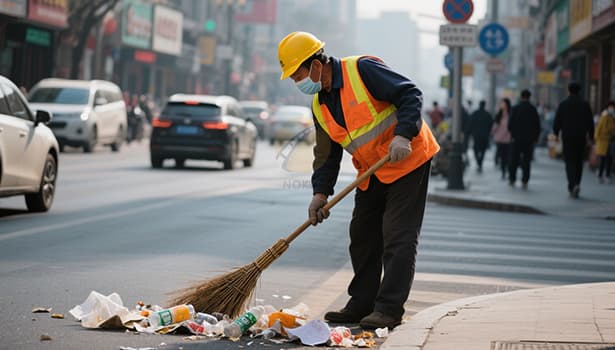
After wearing, it is necessary to check the "coverage area" and the "reflective strip status" to ensure that the complete reflective area can be seen from any Angle.
If you find that the reflective strips are covered by the collar or hat, you need to adjust your clothing. If the size of the vest is too small to cover completely, it needs to be changed to a suitable size immediately.