When you open Alibaba International Station or attend global transportation engineering exhibitions, the promotional pages of almost all solar road stud suppliers will label "Factory Direct Factory Direct Supply". However, many importers and engineering contractors will face the same confusion: seemingly uniform factory quotations, but the quality, supply stability, and customization services vary greatly. Behind every quotation you receive, it may not necessarily have an independent production line for solar road studs.
This is a common situation in the solar road stud industry: The market is filled with a large number of trading companies posing as pure factories and those with mixed industrial and trading operations. In the next blog, NOKIN will teach you step-by-step to verify the true identity of solar road stud suppliers through practical operations, and objectively analyze the advantages and disadvantages of different suppliers to help you match the most suitable partner for your orders.
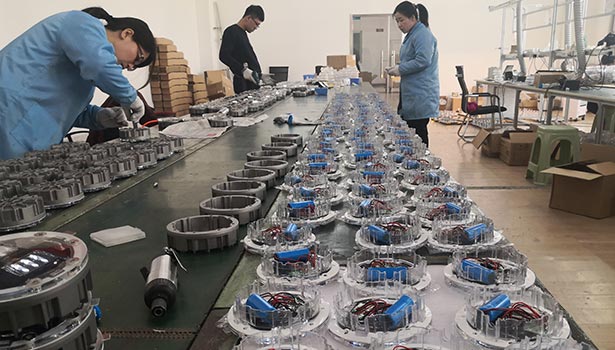
The core reason why many buyers stumble is the lack of clear understanding of the industry supplier forms. Clearly identifying the core characteristics of the three types of entities can avoid conceptual confusion at the root and accurately screen suppliers. The solar road stud industry is mainly divided into pure factories, pure trading companies, and integrated industrial and trading companies. The operational models, service capabilities, and suitability for orders of these three forms are significantly different. The specific characteristics are as follows in the table:
|
Supplier Type |
Core Operating Characteristics |
Industry Operation Characteristics |
|
Manufacturer |
Has a complete independent production line covering aluminum die-casting, injection molding, SMT assembly, final assembly, and finished-product testing, with all processes completed at the same factory site. |
Focuses deeply on a specific field, specializing in solar road studs and related road sign products. Has extensive manufacturing expertise, independent mold development capabilities, and strong customization capabilities. |
|
Trading Company |
Has no production equipment or production lines and does not participate in product manufacturing or processing. Relies entirely on supply chain integration to source products and generate profits through sales. |
Offers an extremely wide range of product categories, including solar road studs, street lights, guardrails, traffic hardware, and other transportation products, but generally lacks independent product R&D capabilities. |
|
Integrated Manufacturer & Trading Company |
Independently manufactures core road stud products while sourcing small, niche accessories and peripheral products externally, combining manufacturing with trading operations. |
A common business model in the industry, combining the production capabilities of manufacturers with the broad product range of trading companies. Suitable for customers with diverse procurement needs. |
Among the three forms, there are both high-quality and reliable solar road stud suppliers, as well as well-organized but unscrupulous bad merchants. The identity of solar road stud suppliers itself is not a criterion for judging quality, the real production, quality control, and supply capabilities are the core.
This is the lowest cost and most reliable way to verify the supplier's identity, and it is also the core certificate that cannot be forged. You can directly ask the solar road stud supplier for the latest business license, and focus on checking the key keywords in the business scope: If it is marked as "manufacturing, production, processing", it indicates that it has production qualifications; if it is only marked as "trading, sales, distribution", it can be directly determined as a pure trading company.
It should be noted that the business license of integrated enterprises will contain both production and trading keywords, and cross-verification is needed to avoid single judgment errors.
The layout of product categories is an intuitive feature to distinguish between factories and trading companies, and the underlying logic stems from the industry investment pattern.
Solar road stud production requires investment in high-fixed assets such as die-casting machines, injection molding machines, SMT equipment, and testing instruments. Regular factories will not blindly expand unrelated categories and have highly focused production lines and processes.
If the supplier's product category only focuses on near-related categories such as solar road studs, reflective road signs, and contour signs, it is likely to be a regular manufacturer.
If a store or official website sells a wide range of products such as road studs, street lamps, traffic barriers, hardware accessories, warning lights, etc., it can be basically determined that it is a pure trading company with no independent production capacity.
Static images and recorded videos can be copied and used, but real-time verification is the key to verifying the authenticity of the production line.
When purchasing, you can directly ask the supplier of solar road studs to start real-time live streaming or video connection, and focus on checking the core production and testing areas: injection molding/aluminum die-casting workshop, SMT assembly line, finished product assembly area, professional testing area (compression testing machine, IP68 water immersion testing equipment, high and low temperature aging equipment).
To avoid the supplier of solar road studs from copying the materials of the cooperative factory, you can require the video to show the date plate of the day, exclusive handwritten marks, or on-site sample display of the real production status.
Solar road studs are road safety products, and export requires relying on exclusive international certifications. This is the most effective industry-specific method to expose fake factories.
Many trading companies will copy the CE, EN 1463 series certification reports of regular factories for external promotion. The purchaser only needs to check the details of the certification documents to expose the trick.
Key to request core qualification documents: EN 1463-3 active luminous road stud standard test report, CE safety certification, IP68 waterproof test report, UN38.3 battery transportation report. Verify the applicant and manufacturer name on the report one by one, and it must be exactly the same as the name of the quotation company's business license.
If the certificate entity name does not match the cooperative company, it is likely to be borrowing or stealing qualifications, and the product quality and compliance cannot be guaranteed.
Molds are the core fixed assets of the factory and also a core capability that trading companies cannot replicate. It is the key basis to distinguish the production and sales entities. When purchasing solar road studs, you can directly propose in-depth customization requirements and ask the other party if they can provide details such as mold number, mold cavity quantity, customization sample-making cycle, and minimum order quantity.
Regular factories can independently complete deep customization of shell shape, battery compartment structure, lighting parameters, and injection molding process, and the salesperson can accurately answer various technical details questions.
Trading companies can only simply change product labels and shell colors, but cannot modify the core structure of the product. When facing questions about technical details, they usually give vague answers and keep passing the call to others.
Ignore the difference in single quotations, from the starting order quantity, stepwise price difference, payment terms, and professional communication, you can quickly determine the supplier's attributes. All cost prices are uniformly calculated in US dollars.
The logic of pure factory quotations is relatively rigid, the unit price of standardized products is transparent, large orders have real and verifiable step discounts, small batch orders have higher minimum order quantities (MOQ), payment terms are relatively fixed, and there will be no arbitrary compromise. The salesperson is proficient in core technical parameters such as wall thickness, injection molding process, compression grade, and testing standards, and can immediately answer professional questions.
Trading companies have more flexibility in quotations, lower MOQ thresholds, and can undertake scattered small orders. The price layer differences are obvious, and they are usually the result of integrating the supplies of multiple factories for bargaining. The salesperson usually does not have the core technology, can only relay upstream information, and often gives vague responses to professional questions.
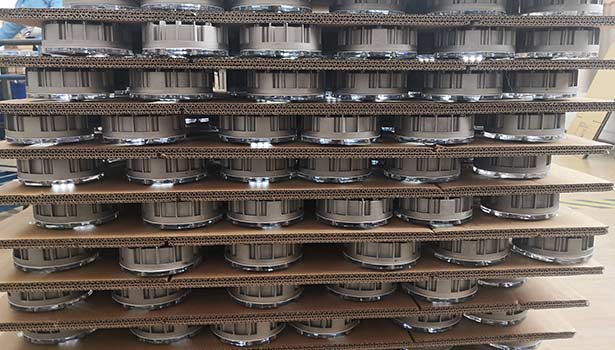
Most of the promotional content in the industry is promoting "factory direct supply is the best", but from the perspective of real scenarios of cross-border procurement and project implementation, this statement is not objective. Because the identity of a pure factory has no absolute superiority or inferiority, it has its own hidden weaknesses and unique values.
| Factor | Manufacturer | Trading Company |
|---|---|---|
| Production line | Own production line | Usually outsourced |
| Customization | More flexible | Depends on factory |
| Factory inspection | Direct | May require third-party factory |
| Product traceability | Easier | More complicated |
| MOQ | Potentially flexible | Depends on upstream supplier |
| Lead time | More controllable | Depends on factory |
| Quality control | Directly managed | Depends on supplier |
| After-sales communication | Direct | May involve multiple parties |
Pure factories focus on their own production line products and have obvious "hammer thinking", only prioritizing the recommendation of their own mass-produced products and will not make diversified adaptations according to project scenarios. Meanwhile, the cost of modifying mature molds in the factory is high, and there is low enthusiasm for small-batch customization demands, and the customization flexibility is poor. During peak production seasons, large-batch core customer orders are prioritized for production, and small orders are easily queued up and delayed in delivery.
High-quality trading companies are not simply intermediaries; instead, they are more suitable for small-scale purchasing companies and scattered project demands.
Firstly, they have the ability to select products from multiple factories, integrate products with different processes and prices, and help the purchasing party compare and screen the best supply sources.
Secondly, they support one-stop combined purchasing, which can simultaneously provide products such as road studs, installation tools, and spare parts, simplify the purchasing process, and reduce communication costs.
Thirdly, professional and established trading companies have a mature quality control system, which can replace customers to strictly control the product quality of the cooperating factories.
In the solar road stud industry, high-quality trading companies may be more suitable for serving small-batch buyers than factories. What you need to determine is whether this supplier has the ability and is willing to take responsibility for quality issues. Truly reliable suppliers must simultaneously possess three core capabilities: complete qualification document disclosure capability, quality responsibility assumption capability, and long-term stable supply performance capability.
If you are still struggling to make a choice, you can combine the purchase volume, demand type, and customization requirements of your project to quickly match the optimal cooperation entity, avoid purchasing risks, and control purchasing costs. The specific matching logic is as follows in the table:
|
Order Type |
Optimal Cooperation Choice |
Core Matching Reasons |
|
Large-batch standard products (>10,000 road studs) |
Pure Factory / Industrial & Trade Integrated Enterprise |
Abundant production capacity, lower unit production costs, greater volume discount potential, stable delivery for large orders, and a mature quality control system |
|
Small-batch trial orders (<1,000 road studs) |
High-Quality Trading Company / Flexible Factory |
Lower MOQ requirements, no need to bear high initial order costs, higher communication efficiency, and lower trial-order risk |
|
Deep customization projects (shell / function / parameter modifications) |
Regulated Factory with R&D and Mold-Making Capabilities |
Own molds and sample production lines enable structural, functional, and appearance customization, with the ability to manage process adjustments and testing throughout the project |
|
Multi-category combined purchasing (road studs + supporting products) |
Trading Company / Industrial & Trade Integrated Enterprise |
One-stop sourcing for multiple materials, consolidated quotations, and reduced time and communication costs associated with coordinating multiple suppliers |
In conclusion, identifying the identity of solar road stud suppliers is merely the first step in procurement screening, and it is by no means the final criterion. Truly high-quality solar road stud suppliers are not determined by their factory or trading identities; the core lies in having compliance qualifications, reliable production capacity, a sense of responsibility, and the ability to consistently fulfill orders.
The core logic of solar road stud procurement screening: First, verify the true identity through six checkpoints, then match the supplier type based on one's own order requirements, and finally verify the other party's quality responsibility ability and supply stability.
|
Check Item |
What to Verify |
Status |
|
Company registration |
Legal company name and business scope |
☐ |
|
Factory address |
Physical production location |
☐ |
|
Production line |
Assembly and manufacturing equipment |
☐ |
|
Testing equipment |
Load, waterproof and battery tests |
☐ |
|
Certifications |
Certificate validity and company name |
☐ |
|
Product samples |
Same model as quotation |
☐ |
|
Production capacity |
Monthly output |
☐ |
|
QC process |
Incoming, in-process and final inspection |
☐ |
|
Factory inspection |
Video or third-party inspection |
☐ |
|
Export experience |
Relevant markets and projects |
☐ |

You can quickly verify through 6 core methods: check if the business license includes production and manufacturing qualifications, observe if the product line focuses on the category of solar road studs, apply for real-time video factory inspection to verify the production equipment, check the name of the certification report's main body, test the mold customization and sample production capability, compare the MOQ and the professionalism of the quotation, and conduct multi-dimensional cross-validation to avoid false factories.
A regular factory has a complete production line, independent molds and deep customization capabilities, and focuses on product categories. The quotations and minimum order quantities are relatively fixed. A trading company has no production equipment, has a wide variety of product categories and a large span, can only do simple brand color modification, and cannot carry out structural customization. The order flexibility is higher. The mainstream market is the integrated production and trading model, which combines production and trading advantages.
Not necessarily. Large-scale standard orders are more suitable for factories, as they have sufficient capacity, lower unit prices, and stable supply. However, factories have high minimum order quantities for small orders and poor customization flexibility. During peak seasons, small orders are prone to being delayed. In scenarios of small batch trial orders and combined purchases, the service cost and flexibility of high-quality trading companies are actually better.
The core certifications required for regular exports are: EN 1463-3 road stud standard test report, CE certification, IP68 waterproof test report, UN38.3 battery transportation report. The key verification point is that the name of all certificates must be consistent with the name of the signed supplier's business license to prevent borrowing or misusing qualifications.
For small orders of 1,000 pieces or less, prioritize reliable trading companies or flexible integrated manufacturing and trading factories. They have low thresholds, low trial order risks, and low communication costs. Only when there are deep customization requirements such as shell structure and functional modification, do you need to screen out regular source factories with mold-making capabilities.