In recent years, infrastructure construction in the Philippines has accelerated, and road safety improvement projects have been fully implemented. Solar road studs have evolved from a niche traffic accessory to a standard product for Philippine highways, ring mountain roads, cross-sea bridges, and port municipal roads. The market share of the IL300 model has been increasing year after year.
The Philippines is located in a tropical island region, frequently affected by typhoons and heavy rainfall, combined with mountainous terrain. The shortcoming of poor night vision is prominent, and night traffic accidents and side skidding accidents on curves remain high. In regions such as Luzon, Cebu, and Mindanao, mountain roads account for over 35% of the road network, with dense curves, and the accident rate on nights is 2.8 times that of straight roads.
Traditional passive reflective cat's eye road studs rely on vehicle headlights for reflection, and visibility drops sharply in rainy, waterlogged, and foggy conditions. They can no longer meet the current road safety standards of the DPWH (Philippine Department of Public Works and Highways). During the 6-month rainy season each year, short-term heavy rainfall occurs frequently, and water accumulation and fog obstruct vision. Ordinary reflective road studs fail.
Coastal roads are eroded by seawater salt fog, and conventional plastic road studs age and crack quickly in a short period, significantly reducing their lifespan. Driven by policies and road conditions, the IL300 embedded solar road studs with active lighting capabilities have rapidly gained popularity and become the preferred product for various road projects in the Philippines.
In recent years, the DPWH of the Philippines has updated road marking regulations, encouraging the replacement of active lighting road markings on island trunk roads with low-efficiency traditional reflective road studs, and the IL300 solar road studs that have passed qualification verification have become the preferred selection in project tenders.
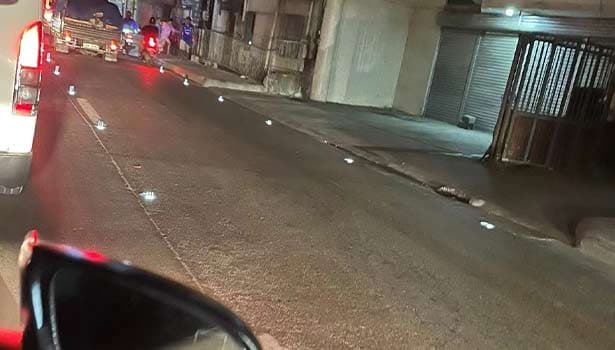
IL300 is an embedded active lighting solar road marking that relies on solar energy for autonomous power supply, and does not require external municipal power lines. The entire operation relies on the built-in intelligent light control module for automated operation.
The top monocrystalline silicon solar panel absorbs natural light and converts it into electrical energy stored in the built-in lithium battery;
When the environmental brightness is below the preset threshold, the light sensing system automatically connects the circuit, and the LED light beads flash frequently and remain constantly on;
When the environment is bright enough, the equipment stops emitting light and enters the charging and energy storage cycle again.
The active lighting mode can transmit road contour cues 150 meters ahead to drivers, effectively extending the reaction distance of vehicles to avoid accidents, and significantly reducing the probability of sudden accidents on curves and water sections at night.
The entire body of IL300 adopts a modular design. It is customized with materials suitable for the humid and salty conditions of the Philippines, and five core components ensure stable operation in harsh conditions.
It is made of high-strength aluminum alloy pressed cast material, resistant to seawater salt fog corrosion, suitable for the humid environment of coastal and island roads, and avoiding water penetration into the shell.
It uses imported high-brightness LED sources, with multi-angle light projection design, and still maintains long-distance visibility in fog and heavy rain weather, which is in line with the rainy season conditions in the Philippines.
It is equipped with a high-temperature-resistant lithium iron phosphate battery, resistant to high temperatures and humidity, and is not prone to bulging and degradation in tropical high-temperature environments, suitable for the perennially hot climate of the Philippines.
It is a high-conversion rate monocrystalline silicon solar panel, which can complete basic charging even in weak sunlight and rainy weather, suitable for the long rainy season in the Philippines.
The six-point locking fixation structure, combined with the embedded installation process, ensures that the vehicle's repeated rolling does not cause the edge to lift and fall off. The entire machine has a measured anti-pressure capacity of up to 80 tons, meeting the frequent traffic needs of high-speed trucks and container trucks.
The overall protection level of the machine reaches IP68, which is fully sealed and waterproof. Even if completely immersed in water, it will not get waterlogged and short-circuited.
The Philippines has a tropical maritime monsoon climate, with high temperatures and frequent rainfall throughout the year. Multiple typhoons make landfall each year, and the coastal sections are constantly eroded by seawater mist. Large-scale water accumulation on the road surface is a common occurrence.
When the rainwater floods the top surface of the stud, the internal circuitry is not disturbed by water vapor, and there is no need for batch maintenance after a typhoon;
It resists salt fog corrosion on the coast, and the lifespan of the roads in the Manila and Cebu port areas is three times longer than that of the plastic model studs;
Most of the machine is buried in the asphalt, and the water accumulation from the typhoon and the impact of crushed stones are difficult to damage the main body of the equipment.
The northern part of Luzon and Palawan in the Philippines have dense mountainous curves, and there are no streetlights along the edges of the expressways and cross-sea bridges, which are high-risk sections for traffic accidents.
|
Application Scenario |
IL300 Solar Pavement Marker Function & Advantages |
|
Mountainous Curve Points |
IL300 actively flashes to outline the curve direction without relying on vehicle headlight reflection, helping warn drivers to slow down in advance and improving night driving safety. |
|
Both Sides of Cross-Sea Bridges |
In streetlight-free coastal sections, continuous installation of IL300 forms a clear luminous guiding line, helping drivers distinguish the boundary between the bridge and the sea. |
|
Port Freight Roads |
With frequent heavy container truck traffic, IL300’s 80-ton compression resistance is ideal for high-load road conditions and helps prevent damage caused by long-term heavy pressure. |
Compared with traditional passive reflective studs, IL300's active lighting can increase the driver's reaction time for predicting the road conditions by 2-3 seconds, greatly avoiding sudden rollovers and cliff falls.
In recent years, the DPWH has implemented the official technical specification "Solar Pavement Levelled Marker", incorporating active lighting solar pavement markers into the standard material list for trunk roads.
The specification clearly limits hard parameters such as stud anti-pressure, waterproofing, lighting brightness, and installation adhesive materials. IL300 has passed the DPWH product qualification review and has been widely included in the government procurement selection list.
Nowadays, in provincial road renovation and national infrastructure bidding projects in the Philippines, the DPWH prioritizes compliant solar pavement markers, which is also a key policy factor for the sharp increase in IL300 orders.
The municipal financial budgets at all levels in the Philippines are limited, and the funds for later road maintenance are tight. IL300 benefits from the low-cost operation and maintenance advantages and gains favor from local municipal procurement.
Comprehensive calculation of the life cycle investment shows that the return on investment (ROI) of the IL300 project is much better than the traditional lighting + reflective stud combination scheme, making it the preferred choice for local governments in the Philippines to reduce costs and increase efficiency.
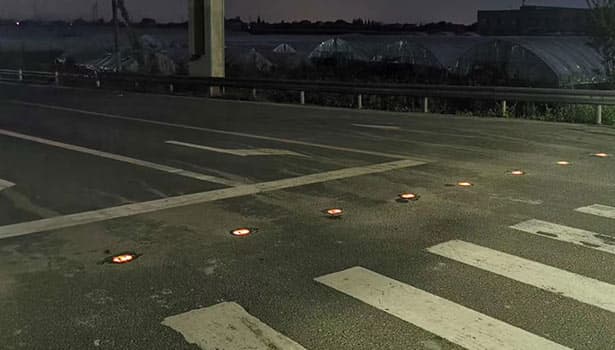
The main materials used for the entire renovation project of the Ring Road Expressway and the North-South Mainline Expressway in Manila, Philippines, are laid along the lane boundaries and the edges of the emergency lanes. At night, they outline the lane contours.
In the northern mountainous province of Luzon, this road standard is equipped on the winding and sharp bends of the mountainous sections. It compensates for the shortcomings of high costs and difficult installation of street lights in mountainous areas, and is the main product for the safety renovation of mountain roads.
The guardrails at the base of the cross-sea bridge and the transitional area between light and darkness at the entrances and exits of the tunnels have been installed to address the visual blind spots caused by the sudden change in light at the tunnel entrances.
The deceleration zone at the expressway toll station and the edge lines of the interchanges are set up to remind vehicles to change lanes and slow down in advance, thereby reducing the occurrence of accidents involving collisions at toll stations.
The main freight transportation arteries in the port areas of Manila and Cebu, designed to accommodate heavy trucks + high salt-spray harsh environments.
Open-air parking lots for large supermarkets, internal roads in logistics parks, optimizing the boundaries of parking spaces and guidance for park access.
The following table compares the adaptability of the two products in Philippine road conditions based on 7 core indicators, clearly distinguishing the differences in selection:
|
Comparison Item |
IL300 Solar Pavement Marker |
Traditional Reflective Road Studs |
|
Night Visibility Distance |
Over 150 meters |
30–50 meters |
|
Rain Performance |
IP68 waterproof, normal lighting in waterlogged environments |
Direct failure of the reflective surface when covered by water |
|
Active Lighting |
LED self-flashing, 24/7 warning |
Passive reflection, relying on vehicle headlights |
|
Energy Consumption |
Solar self-powered, zero electricity cost |
No power consumption, but no active light source |
|
Installation Method |
Embedded into the road surface |
Surface adhesive type |
|
Service Life |
5–8 years |
1–2 years, less than 1 year in coastal areas |
|
Adaptability in Philippine Mountainous Areas |
★★★★★ |
★★ |
From the geographical characteristics of rainy, mountainous, and coastal areas in the Philippines, IL300 comprehensively outperforms traditional reflective road studs.
Clean the asphalt surface, sand, oil stains at the installation point, repair and level any damaged potholes, ensure the bonding surface is flat and dry, and enhance the firmness of epoxy resin bonding.
Drill holes according to the specifications of the IL300 body, with the hole diameter and depth matching the burial height of the product, leaving a reasonable gap to facilitate glue injection for fixation, and follow the unified drilling standards for DPWH projects.
Select DPWH-certified special road epoxy glue to fill the holes and gaps evenly, wait for it to set and cure before reopening traffic, to prevent the road studs from loosening due to vehicle rolling.
Avoid outdoor construction during heavy rain, wait for the road to completely dry before drilling and injecting glue, to prevent water accumulation from diluting the glue and causing bond failure.
Highway construction requires closing one side of the lane, segmental construction, and strictly following the DPWH highway marking construction rules.
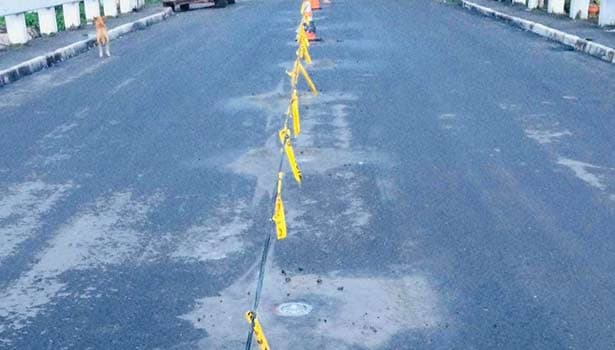
This chapter is for Philippine engineering contractors and government procurement parties, to avoid purchasing inferior products and help with precise procurement.
Prioritize verifying that the product's compressive strength is ≥ 80 tons. Philippine highways are frequently traversed by heavy trucks, and low compressive strength products are prone to breakage and scrapped within a short period.
Road studs with a lower IP68 protection level are highly prone to water ingress and circuit board damage in the rainy season in the Philippines.
Select high-brightness multi-sided LED models to meet the long-distance visibility requirements in foggy and rainy nights, and conform to the DPWH brightness parameter standards.
Opt for lithium iron phosphate energy storage batteries, suitable for the high-temperature and sun exposure environment in the Philippines, to avoid the early aging of ordinary lithium batteries due to high temperatures.
Bid projects must request DPWH-related qualification reports, and products without certification cannot pass the project acceptance.
Local engineering contractors in the Philippines often need to customize the shell logo and flashing mode, and confirm the OEM customization service of the manufacturer in advance.
The Philippines closely follows the direction of smart infrastructure development in ASEAN, and green clean energy transportation accessories have become a new trend in infrastructure construction.
The Philippines vigorously promotes solar-based transportation facilities to reduce power consumption of municipal power grids, which aligns with the environmental-friendly infrastructure policy.
The renovation of provincial roads across the Philippines and the batch commencement of island connectivity projects have led to simultaneous upgrades in road safety facilities.
Relying on the Belt and Road Initiative infrastructure cooperation projects in Southeast Asia, a large number of compliant solar road studs have been implemented in various provinces and cities of the Philippines as part of the infrastructure orders.
Multiple factors combined, the market size of solar road studs in the Philippines will continue to rise in 2026, and the demand for the IL300 benchmark model will continue to increase.
Taking into account the geographical characteristics of frequent rainfall, numerous mountains, and coastal salt fog in the Philippines, combined with the policy support from DPWH, IL300, with its four core advantages of IP68 waterproofing, 80-ton compressive strength, active lighting, and low maintenance costs, precisely adapts to all scenarios of road conditions in the Philippines. It has quickly become the mainstream solar road stud model in the local market.
For local governments and engineering contractors in the Philippines, IL300 can not only meet the DPWH acceptance standards, but also reduce the later road maintenance costs. At the same time, it fundamentally reduces the rate of nighttime road accidents. Its cost performance far exceeds traditional reflective road studs and lighting solutions. With the continuous increase in infrastructure construction in the Philippines, the market usage rate of IL300 in the Philippines will continue to steadily rise in the future.
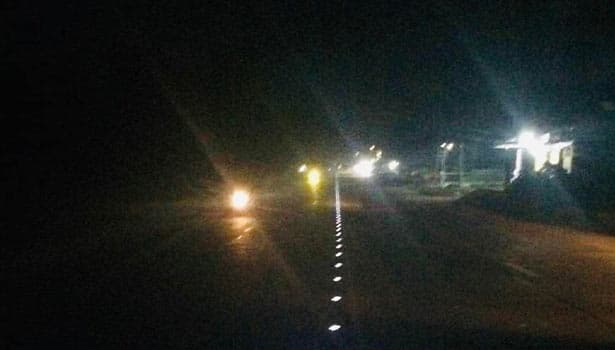
For regular highways and municipal roads, it can be used normally for 5-8 years. For coastal ports and harbors, affected by salt spray, the lifespan is approximately 4-6 years. This is much better than the traditional reflective road studs with a lifespan of 1-2 years.
The DPWH has issued official pavement marking specifications. IL300 has passed the DPWH product inspection and certification and has been included in the official engineering procurement list of the Philippines. It can be used in government bidding projects.
It is fully applicable. The product has been tested and measured to have a compressive strength of 80 tons, capable of withstanding repeated crushing by heavy trucks at high speeds. It is the designated material for the renovation of many national highways in the Philippines.
IL300 is a solar-powered active lighting product. It can still light up in rainy or foggy nights and has a visible distance of 150 meters. Traditional cat eye road studs rely on passive reflection from car lights and fail when there is water accumulation after rain, with a visible distance of only 30-50 meters. The lifespan gap is obvious.